A robot cell that speaks human.
Two six-axis arms on one rail, a lift of trays and drawers that count — behind a wall that smiles when the job is done. Concept‑I is a home workshop in a cabinet, generated end to end in Python.


The film
Watch it do one job, start to finish.
This is one example of the cell at work. Next, we will show it cooking lunch and fitting into a kitchen. Stay tuned.
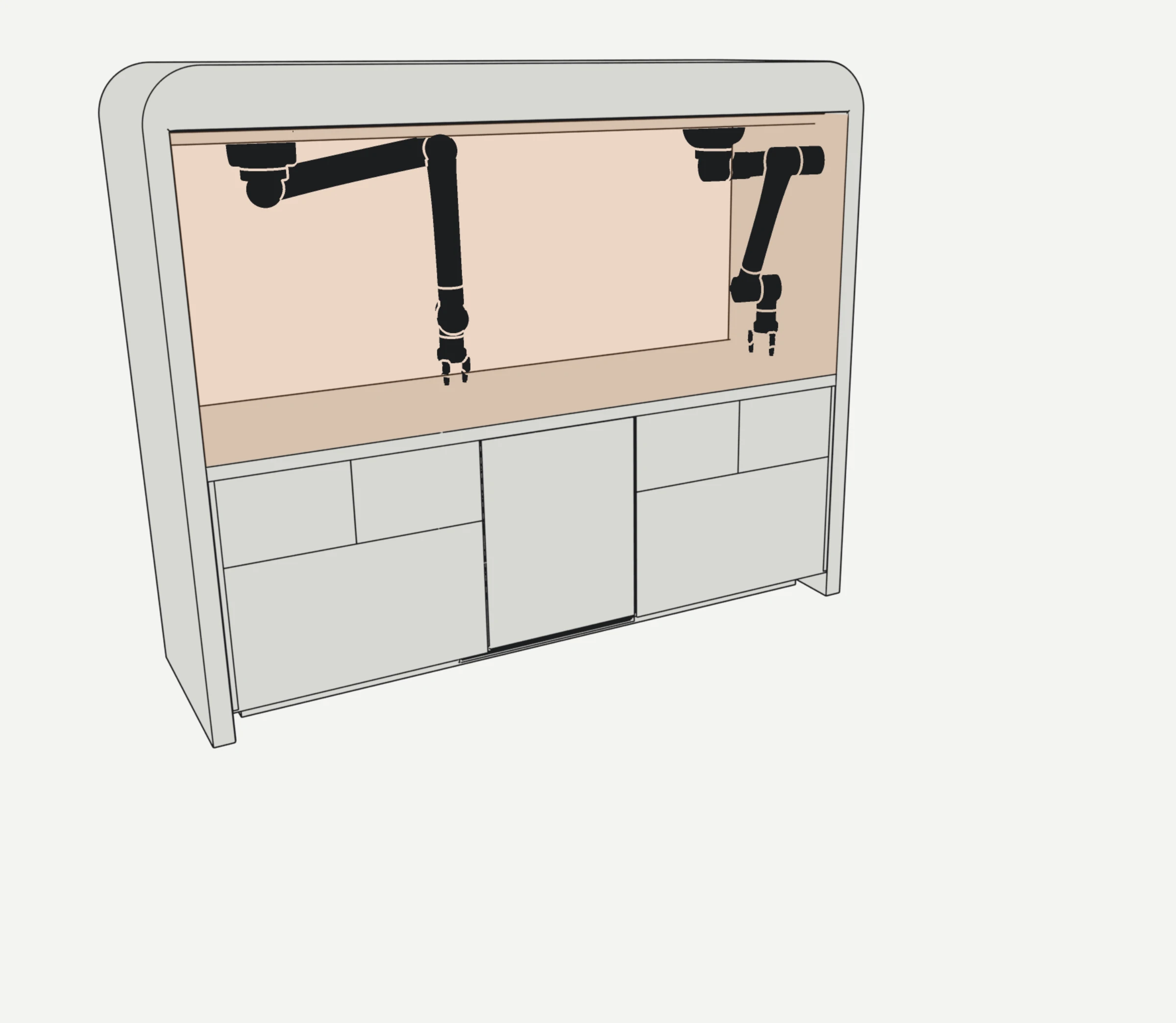
The cell
Everything a small batch needs, in one cabinet.
The wall
A wall that smiles back.
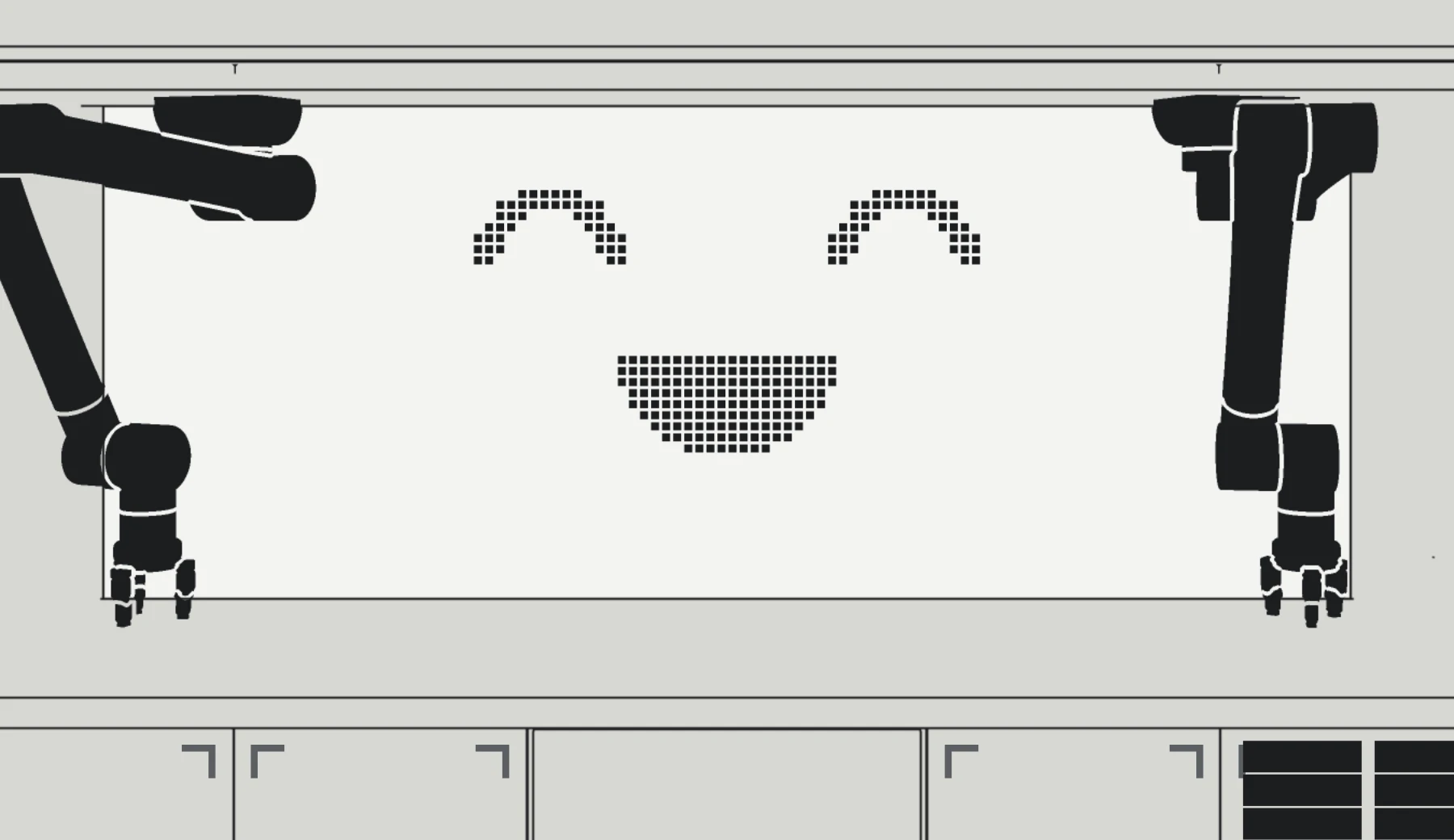
The whole back wall is e-ink: 2.24 by 0.92 metres, 112 by 46 dots at a 20 mm pitch. It holds a frame with the power off, never glares, and uses the same dots for words, progress and a face. Click it.

The same face, rendered on the wall of the model — each dot a real 14 mm tile.
The terminal
Every headline is the next thing to do.
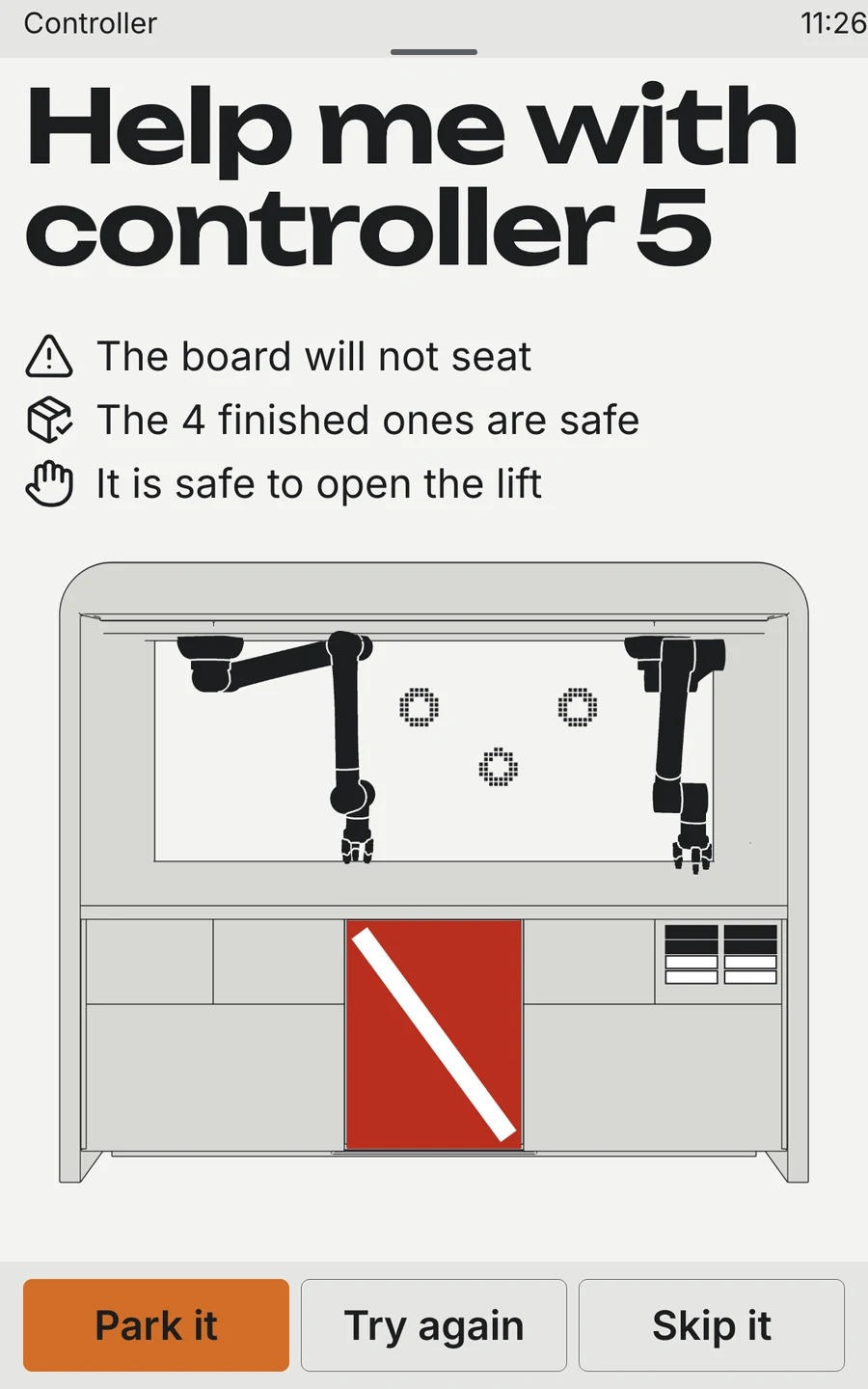
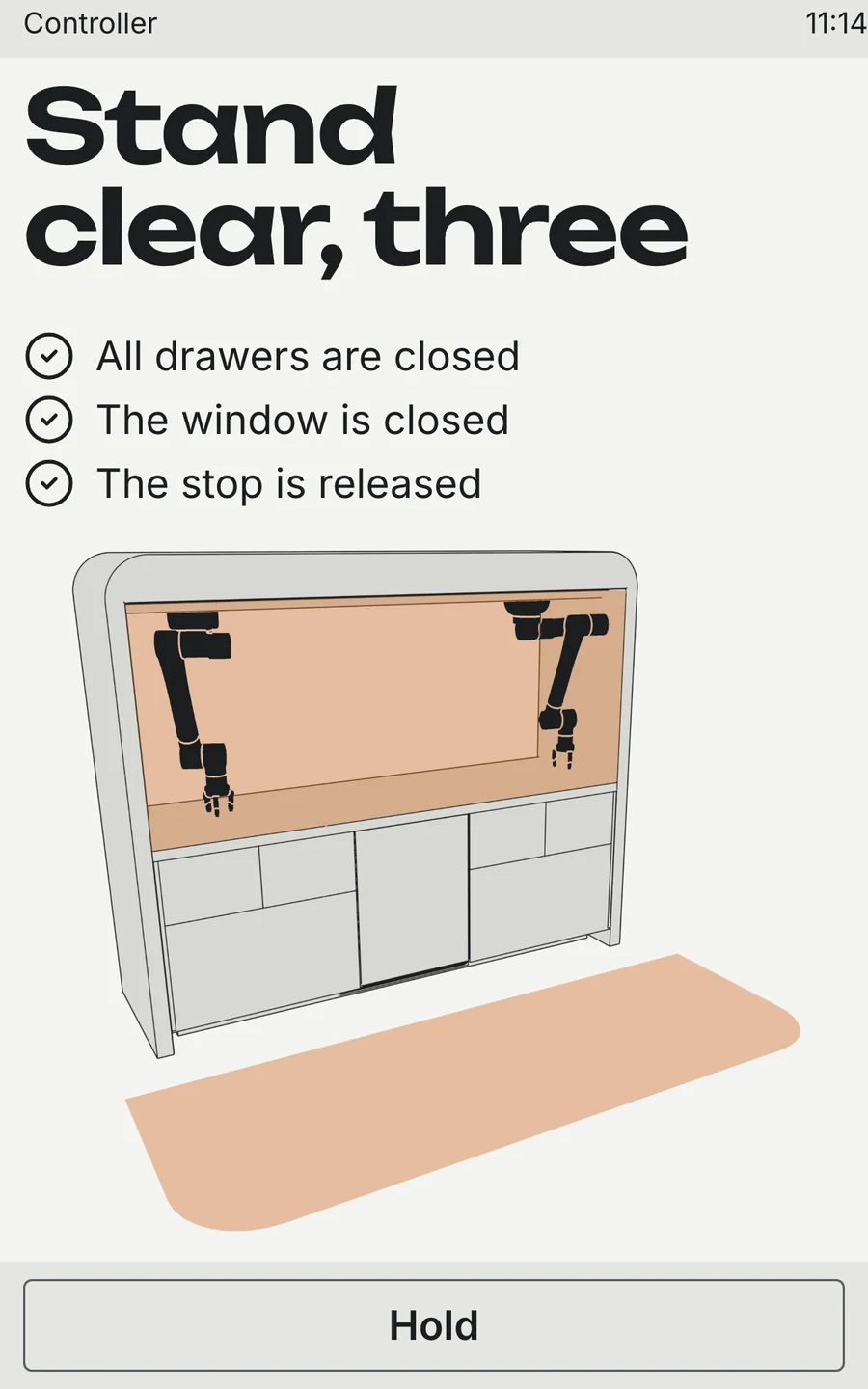
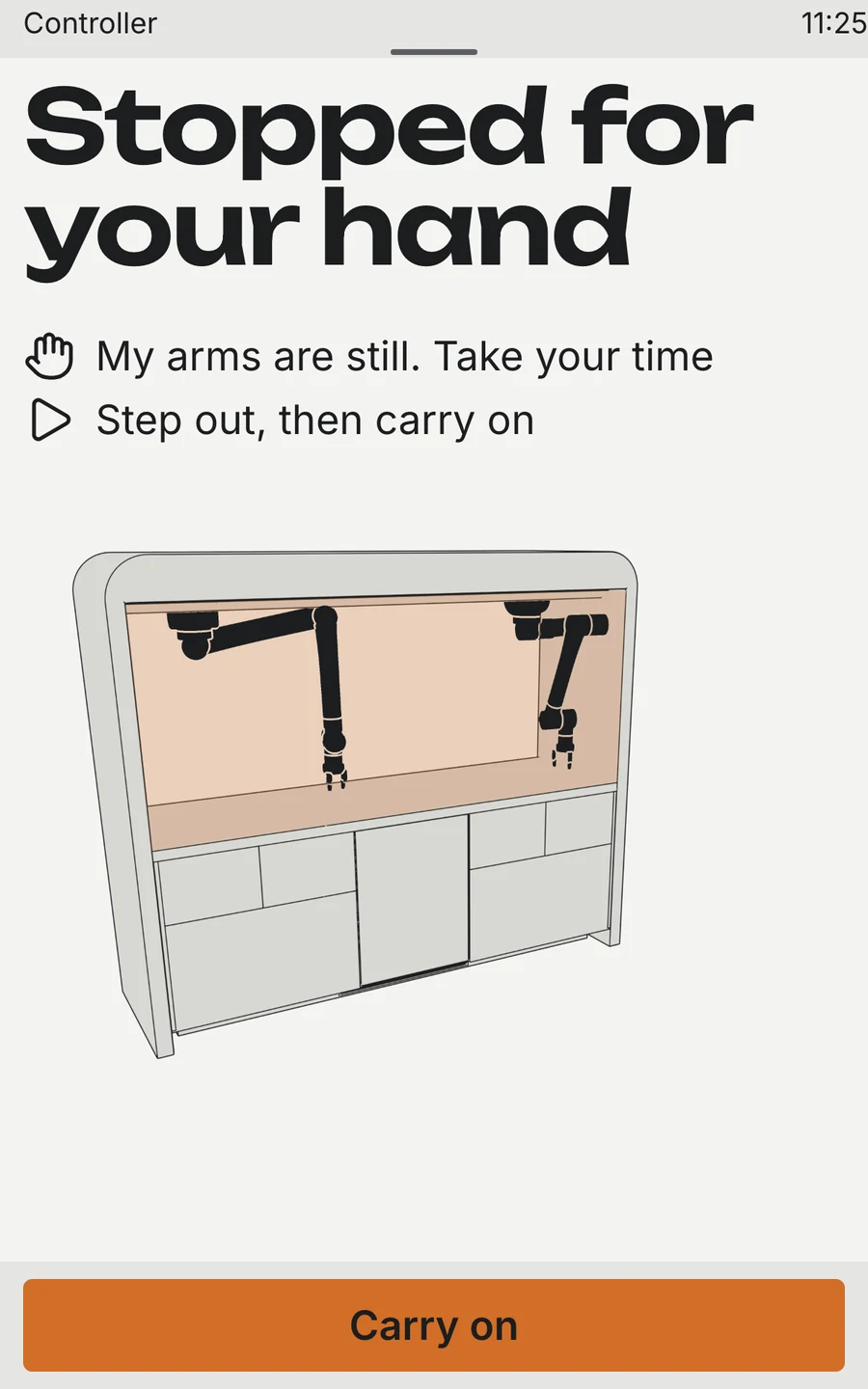
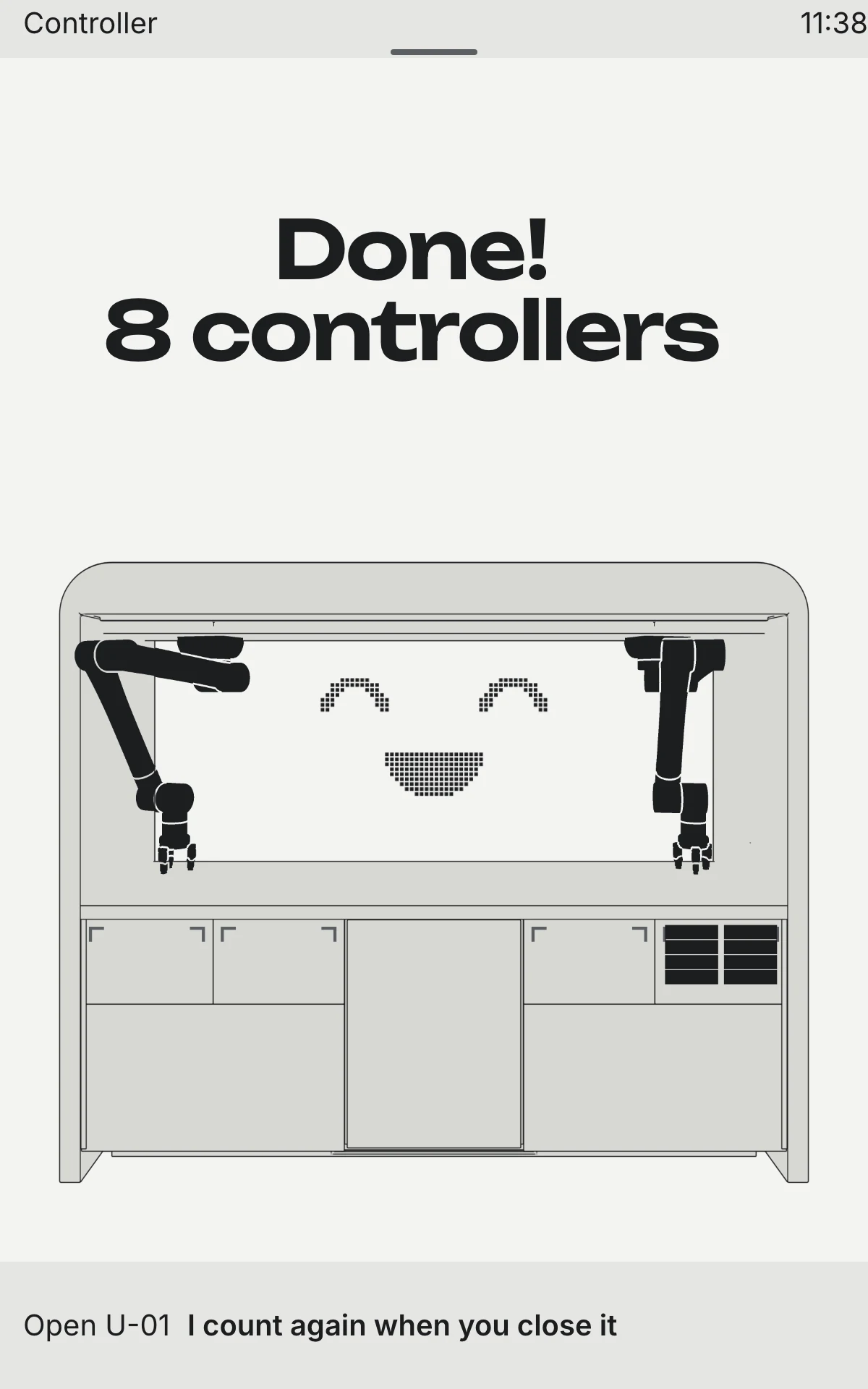
First drafts spoke machine. Now each screen says what you get or what to do, up to three lines say why, and the cell itself shows the one thing that matters, lit.
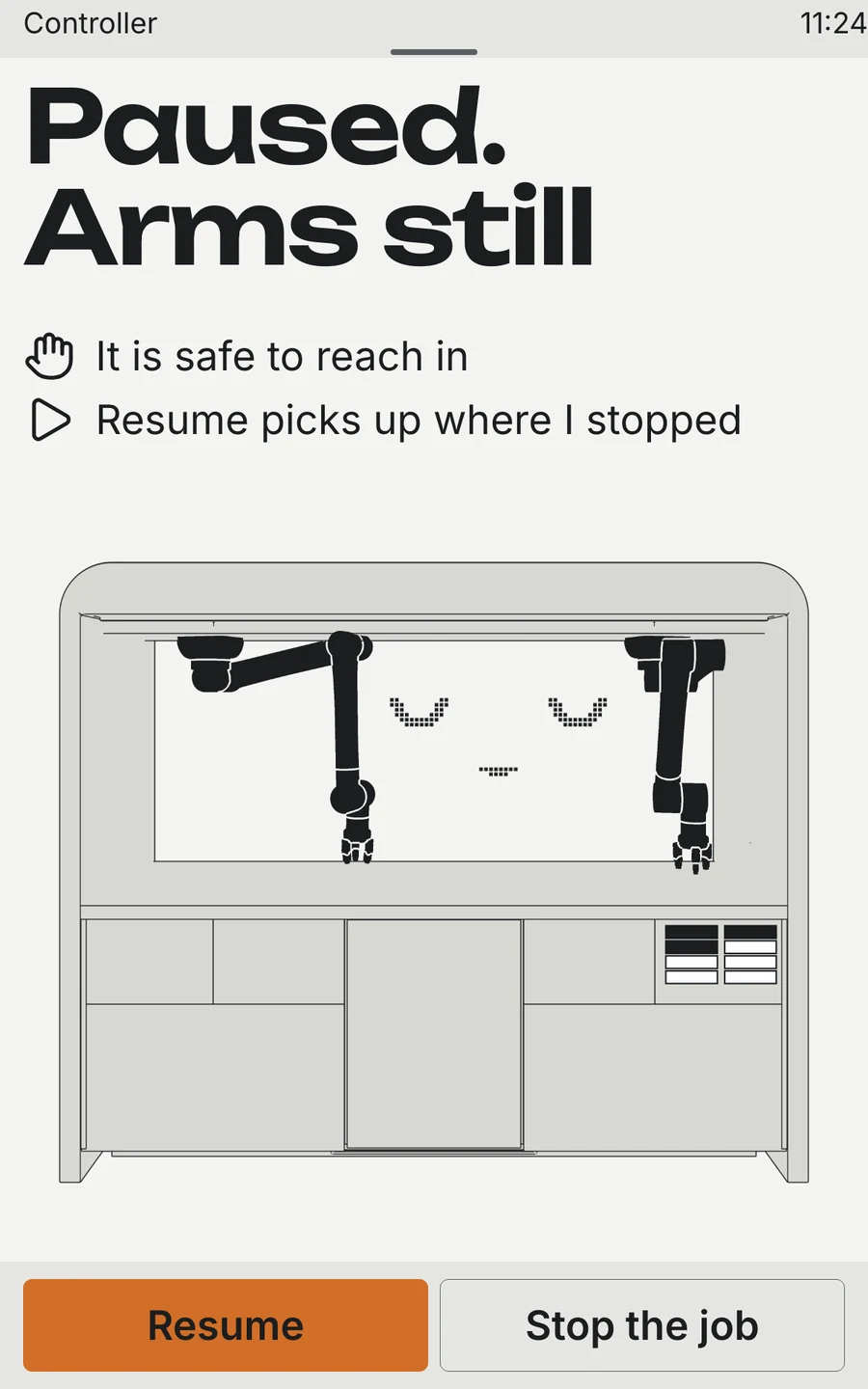
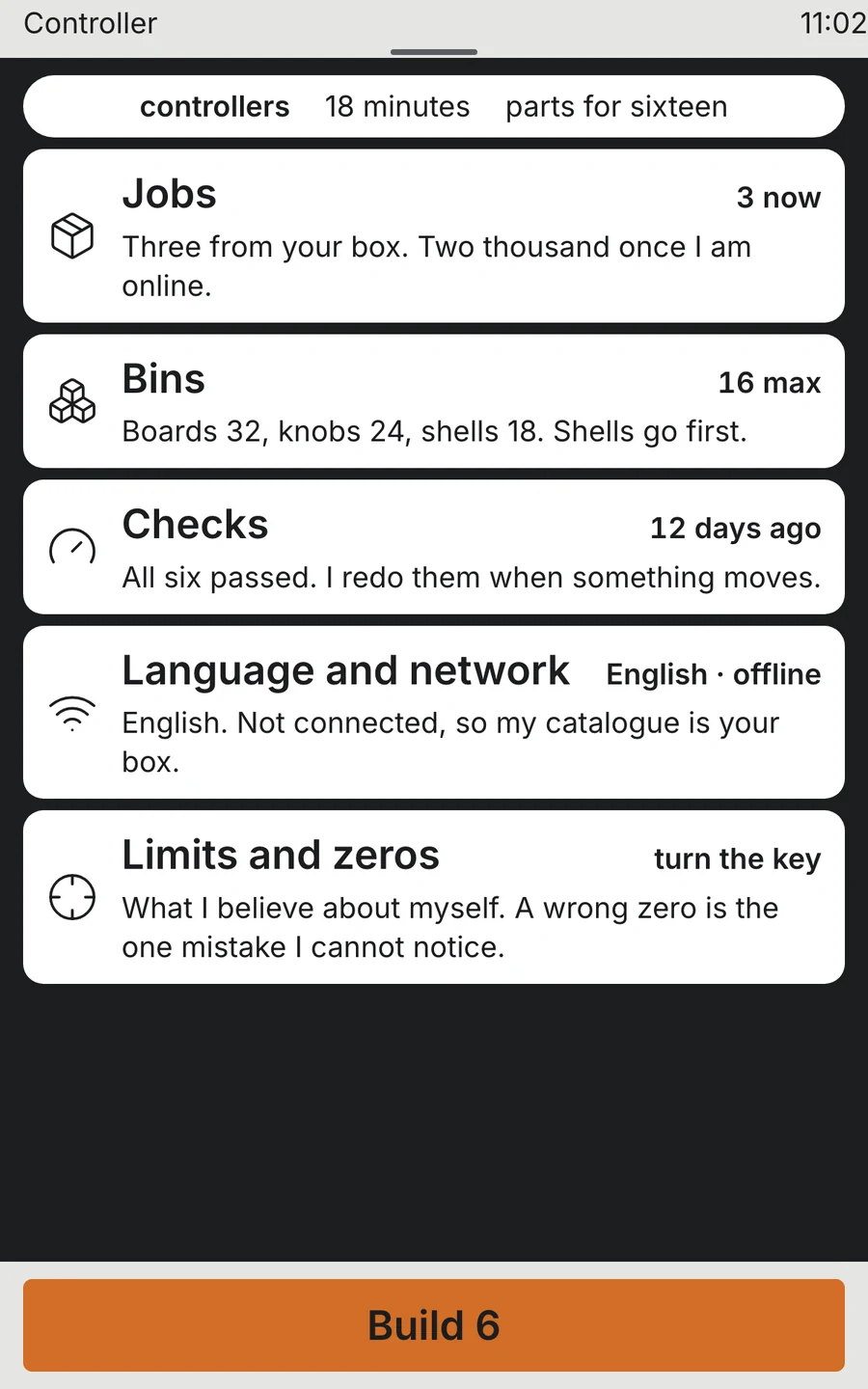
01 / 06
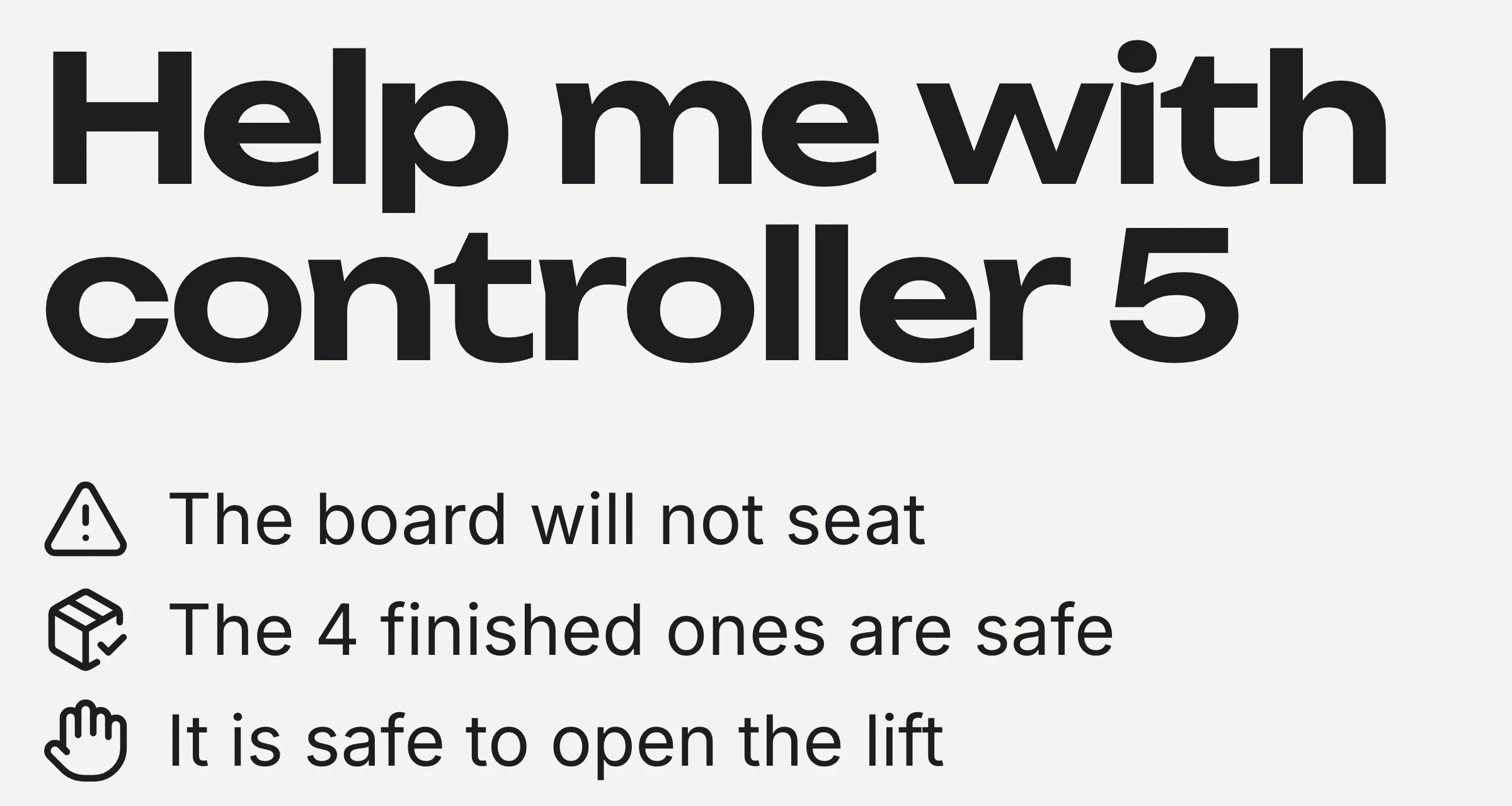
A headline you can act on
Never a status word. The headline is the next thing to do; up to three lines say why, each with an icon that names a thing.
02 / 06
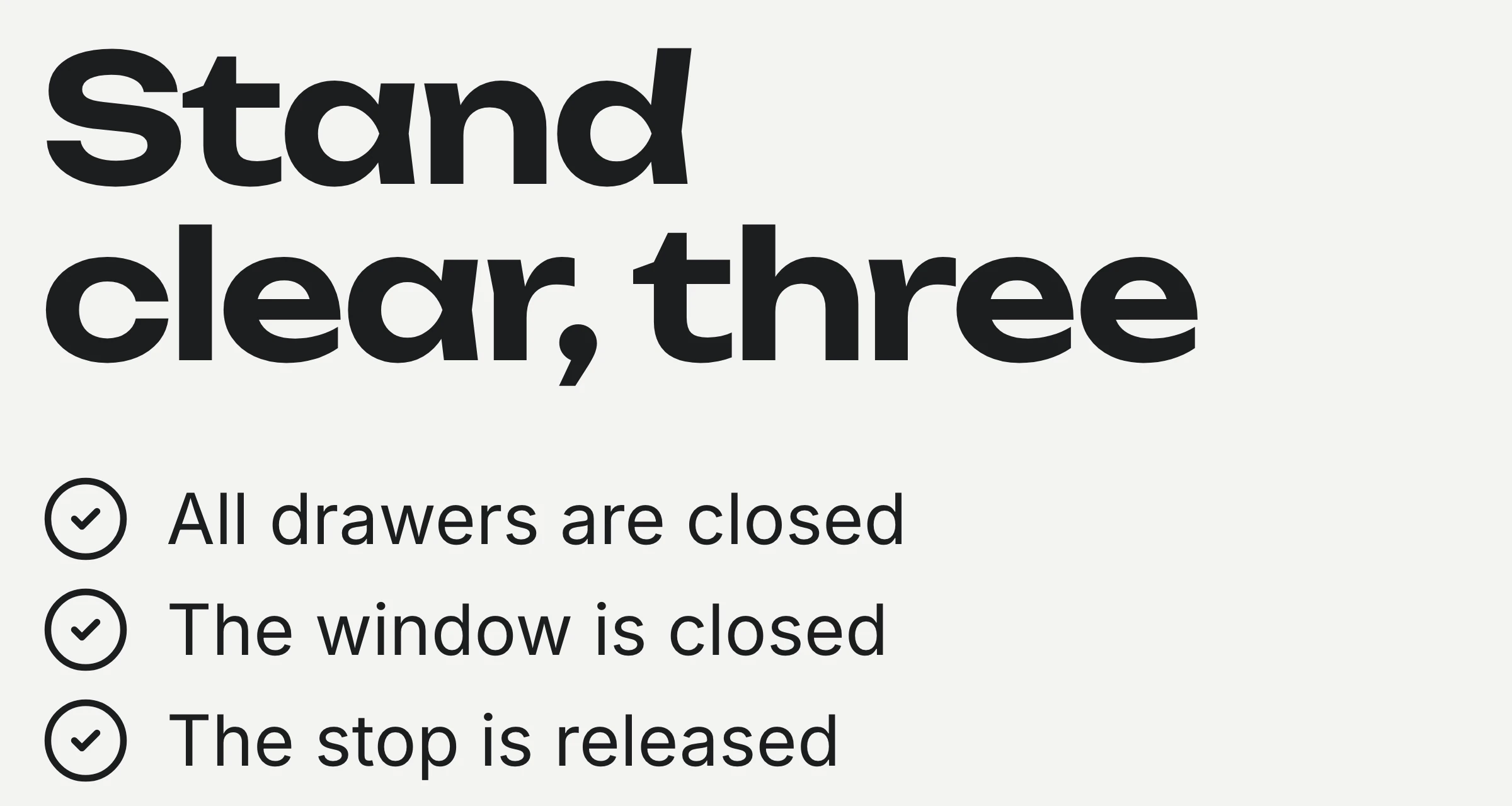
Three checks before it moves
Before the arms start, the screen counts down and ticks off what it has checked for you.
03 / 06
The zone it is watching, lit
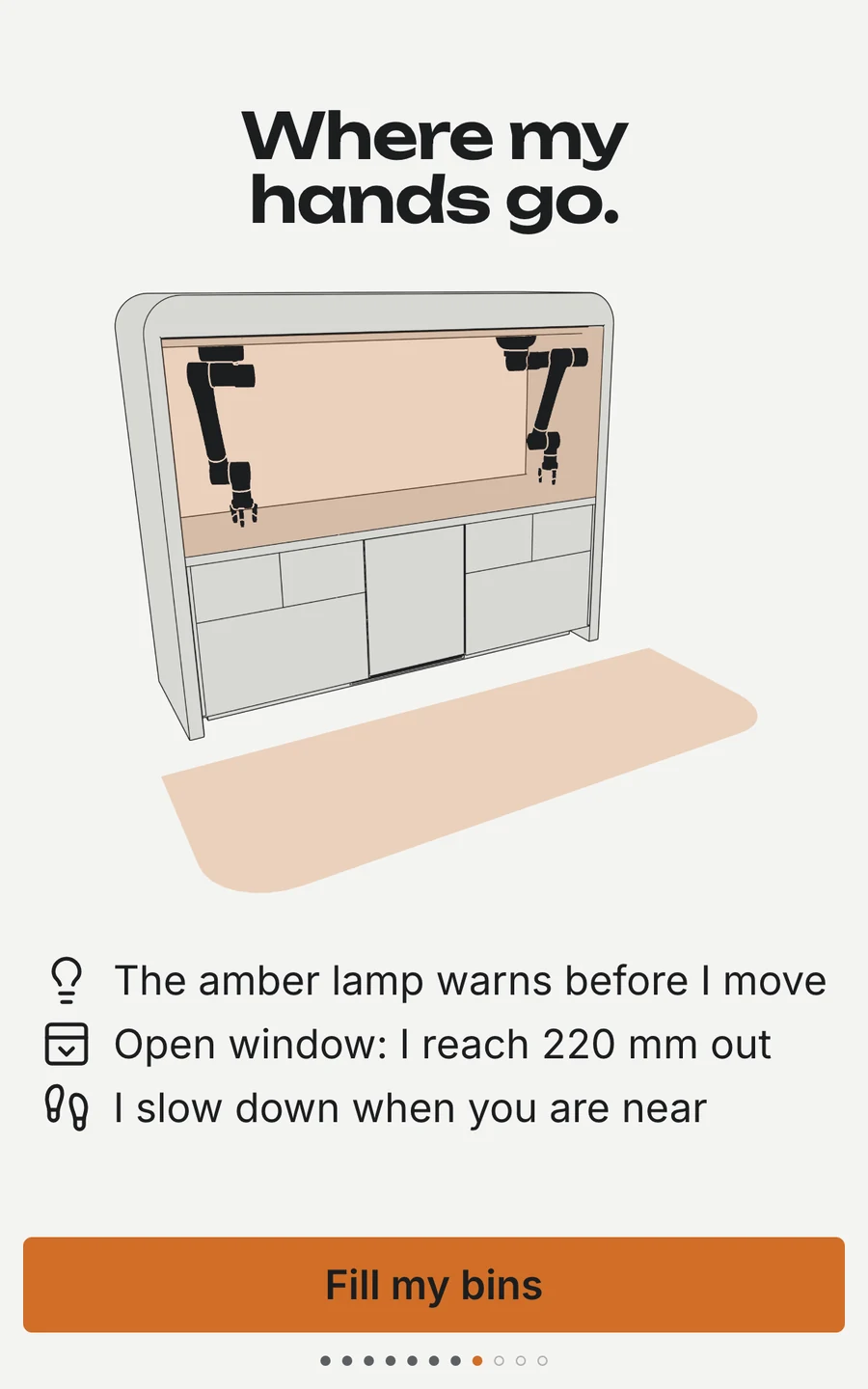
Reach in and the arms stop. The drawing turns to show the volume over the worktop and the floor where you stand.
04 / 06
The same dots as the wall
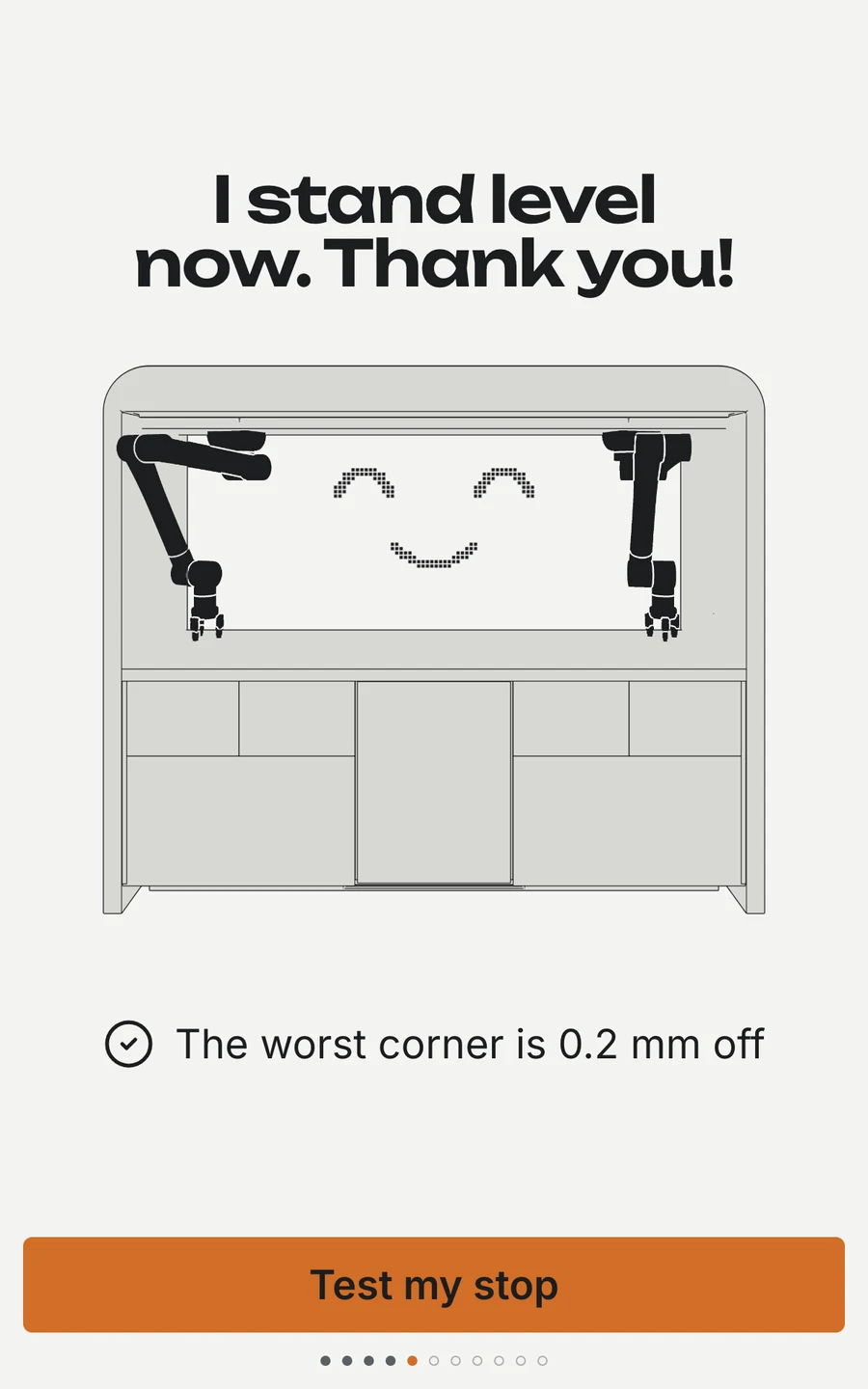
When a batch is done, the drawing of the cell smiles along with the real wall, dot for dot.
05 / 06
One colour for the thing to press
The button your hand needs is orange. Everything else is ink on paper.

06 / 06
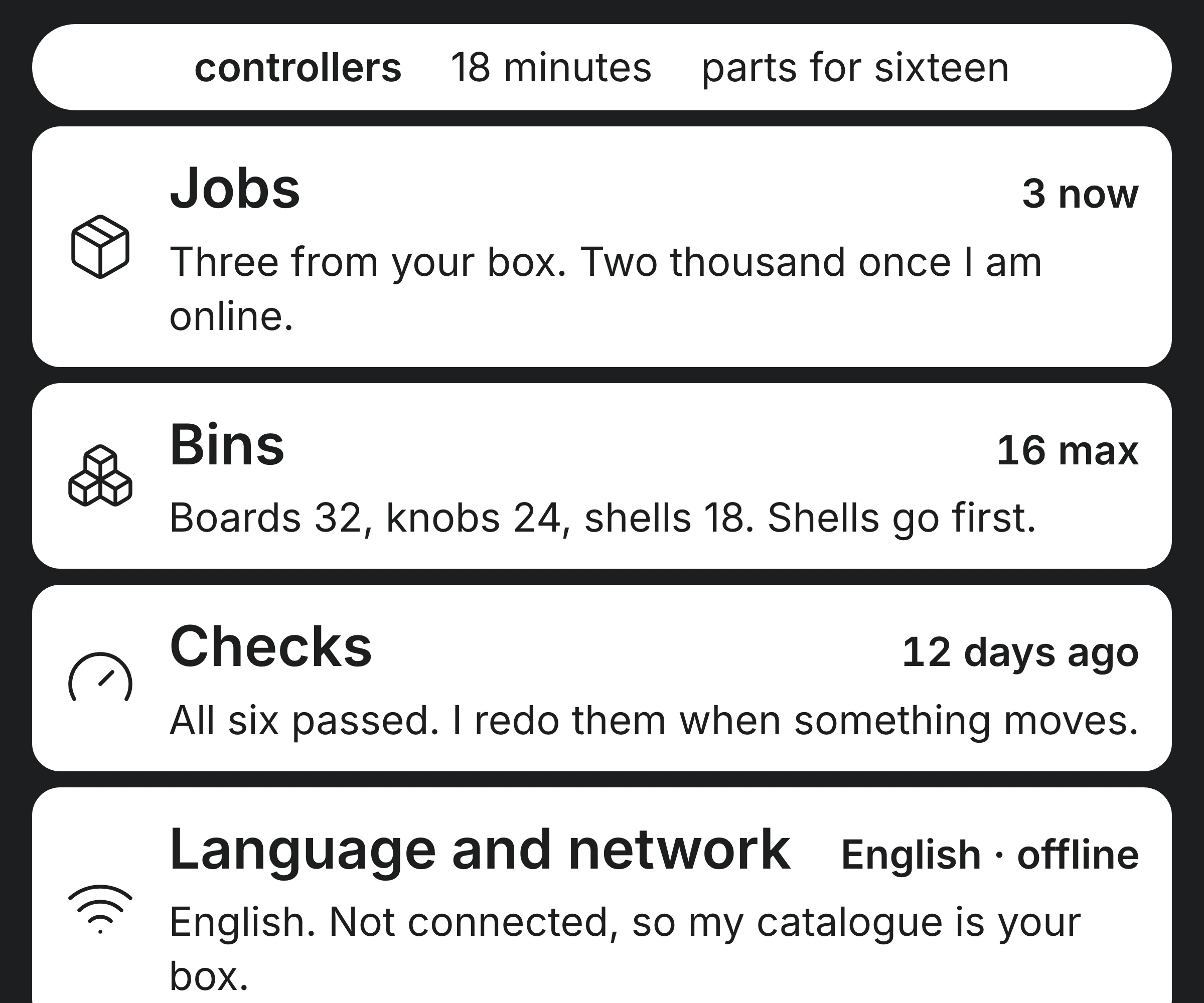
Details live in a pull-down shade
Jobs, bins, checks and the network sit one swipe down, out of the way of the one thing that matters now.
Setup
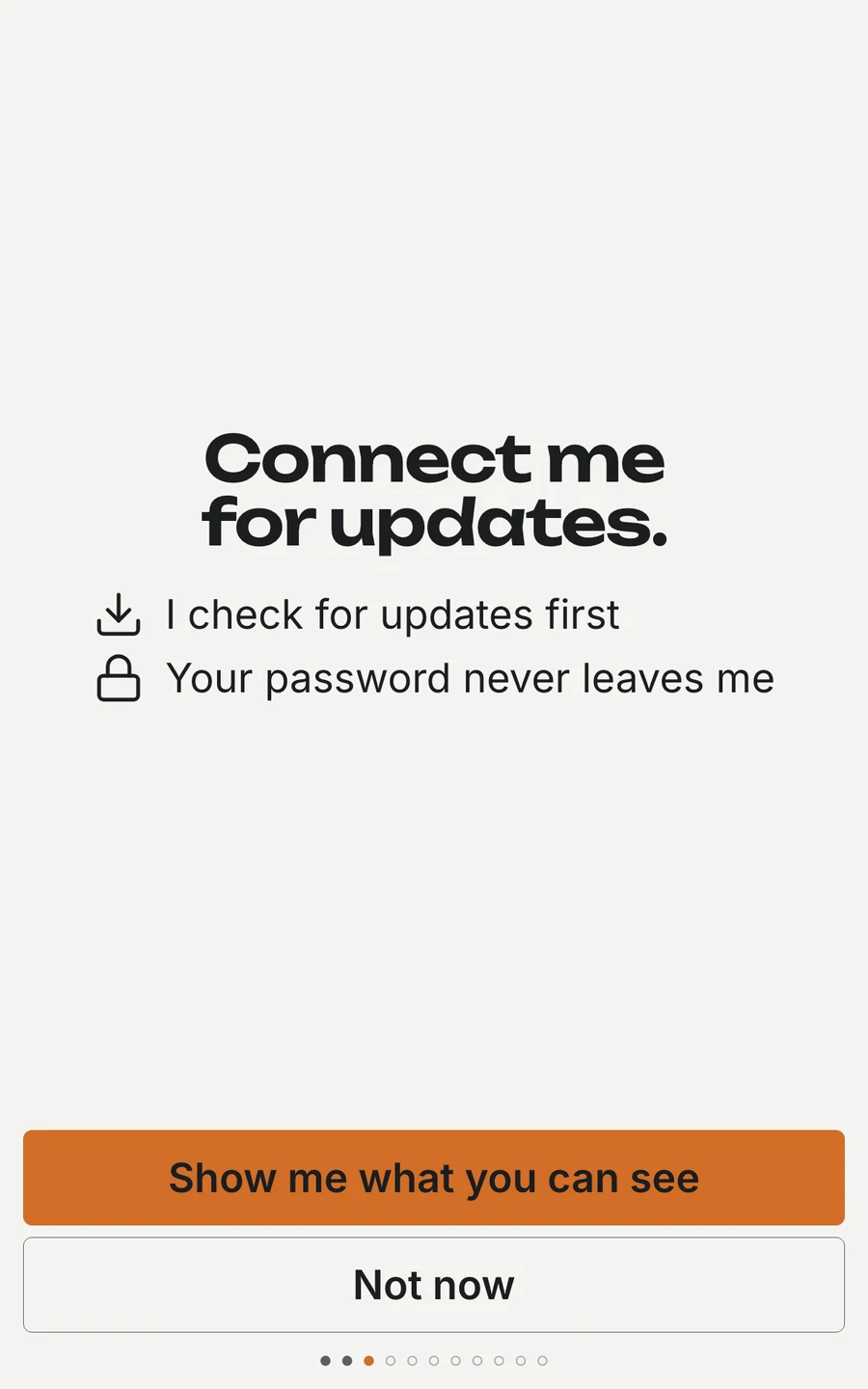
From Wi‑Fi to the first part.
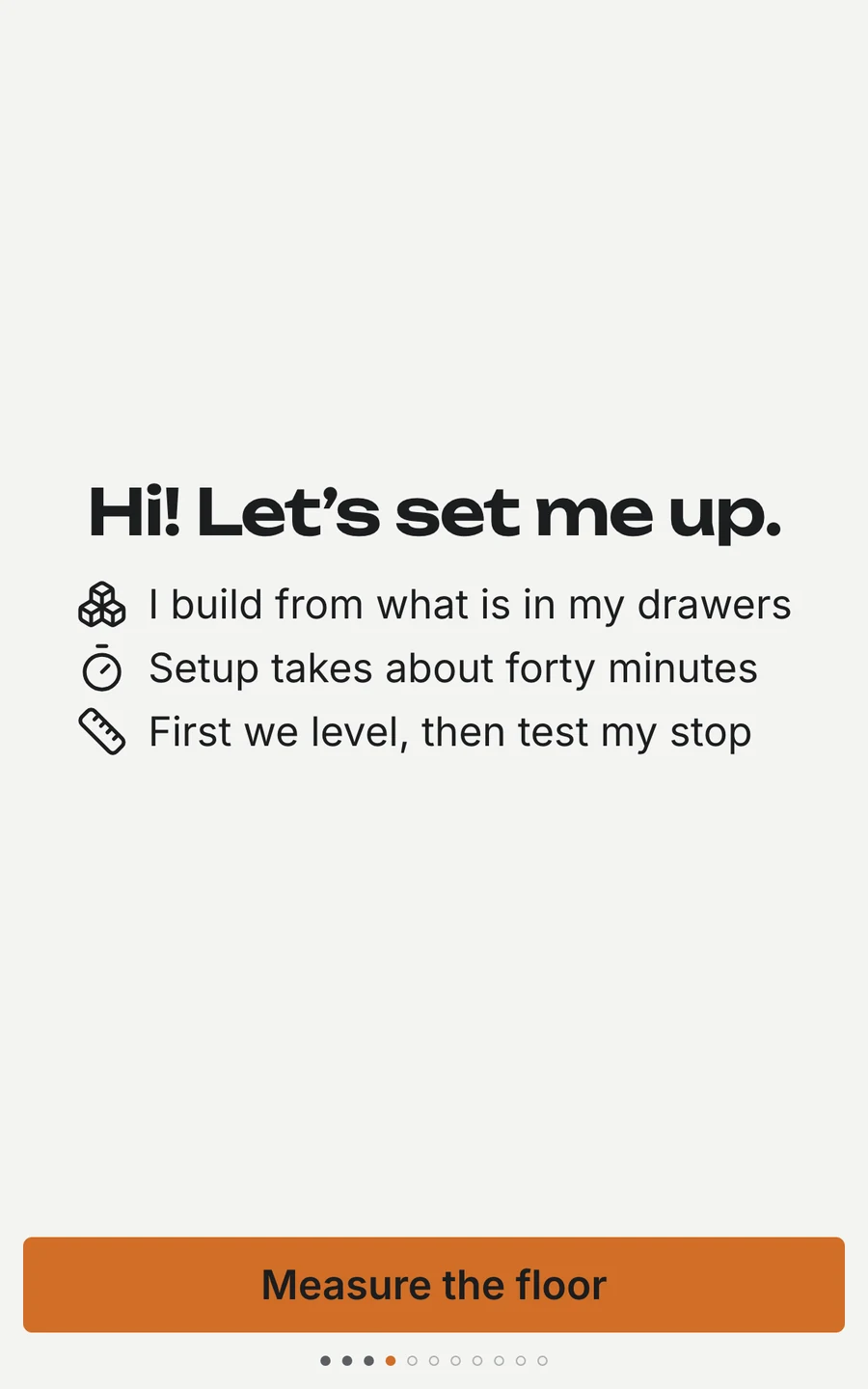
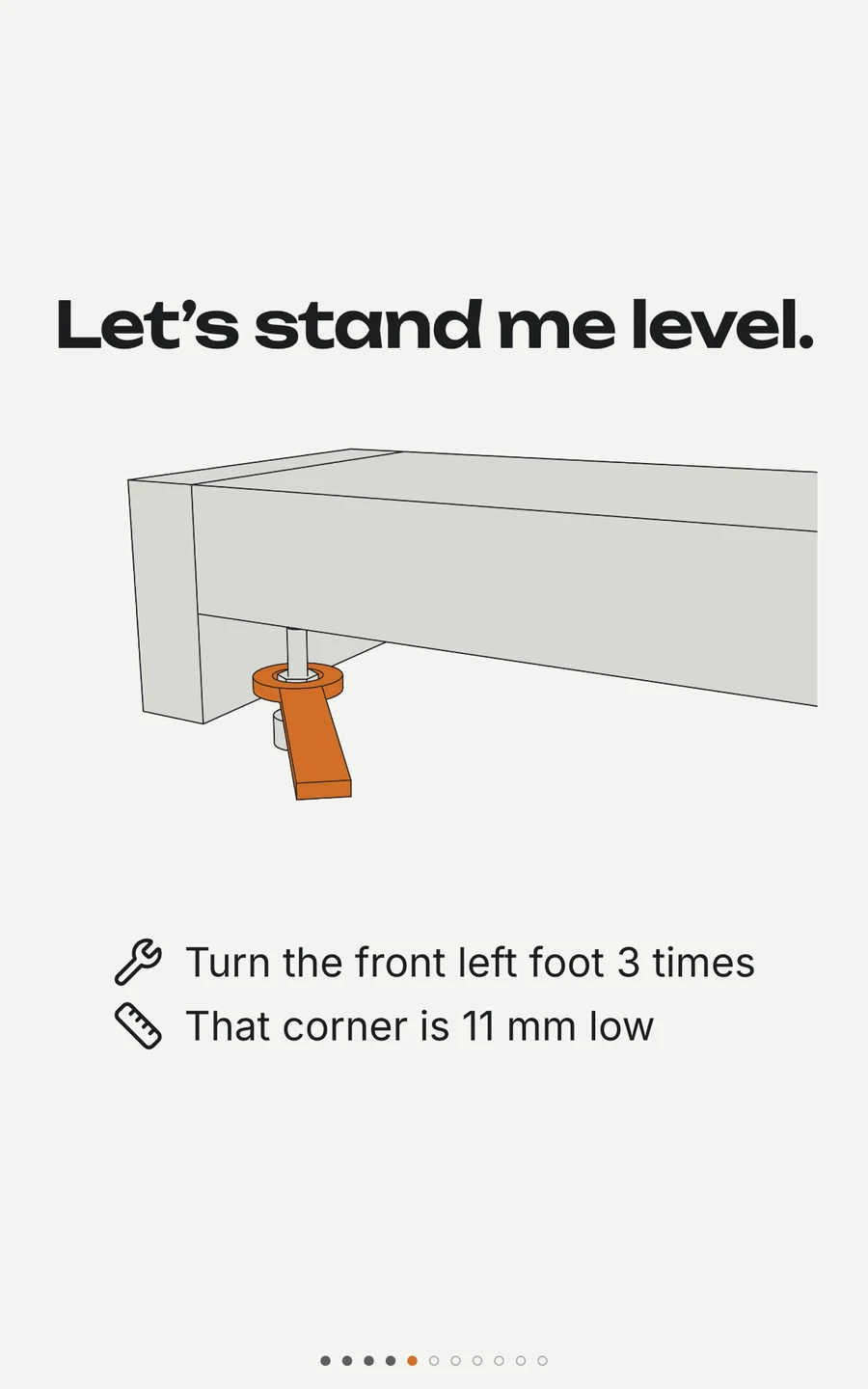
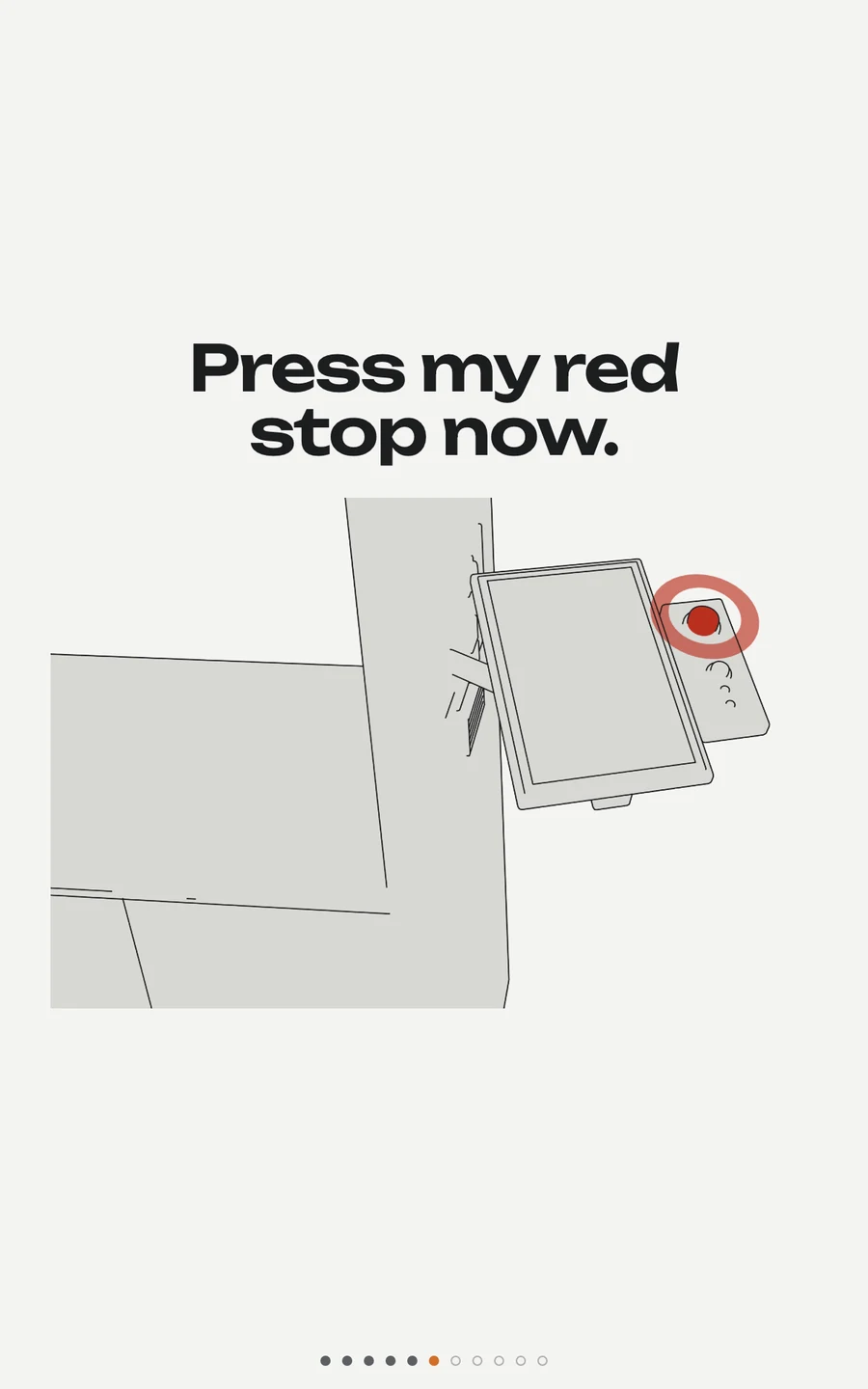
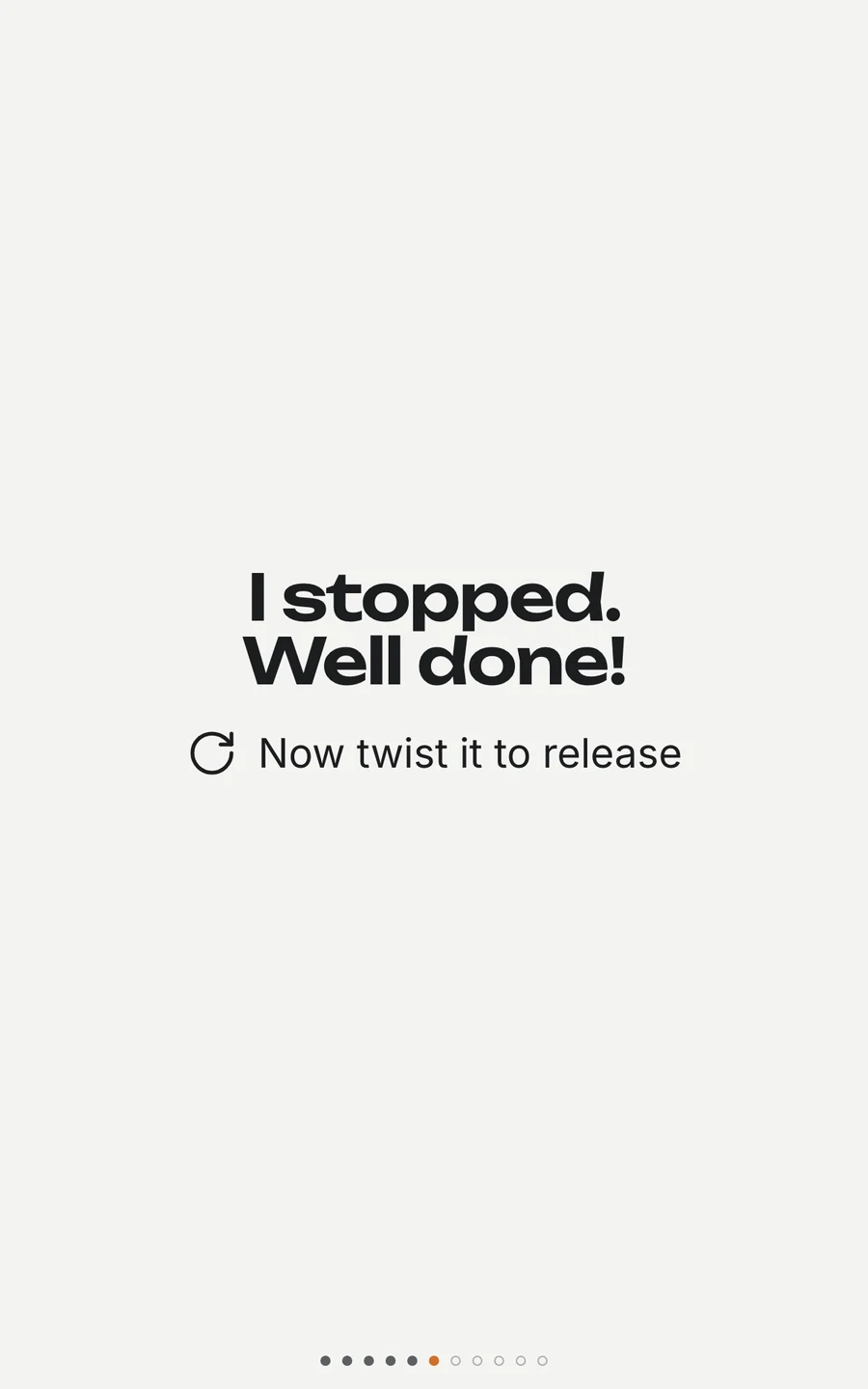
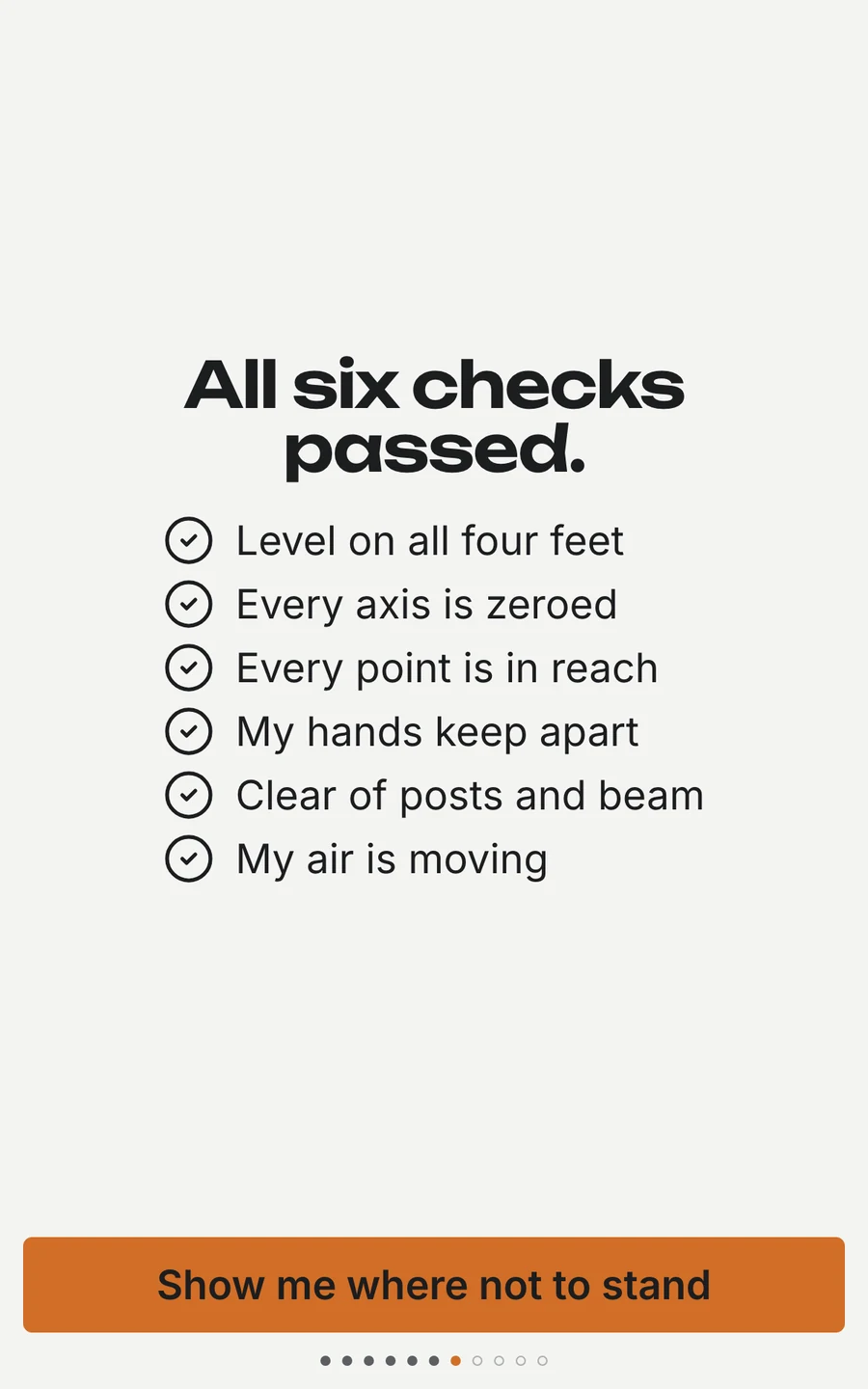
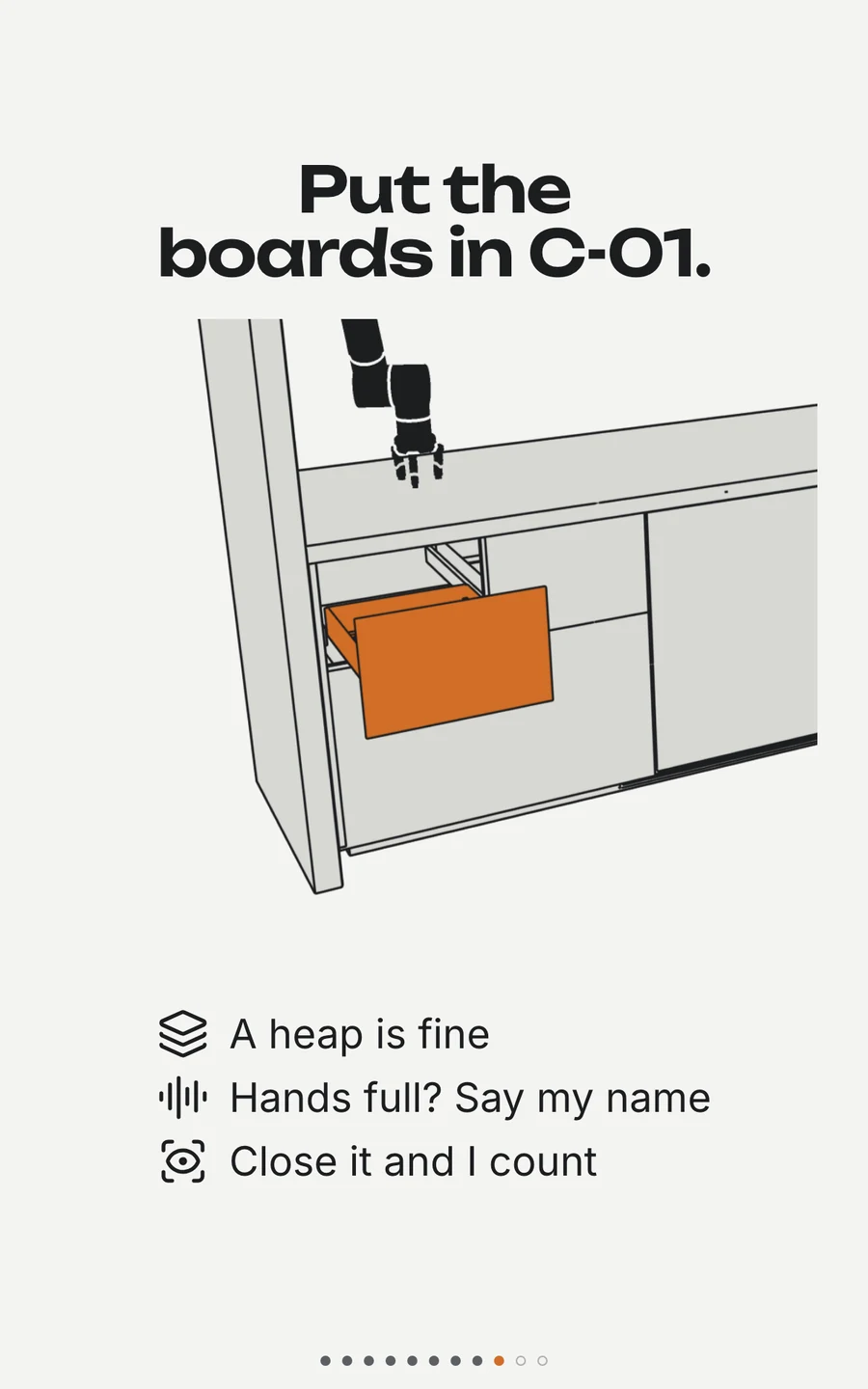
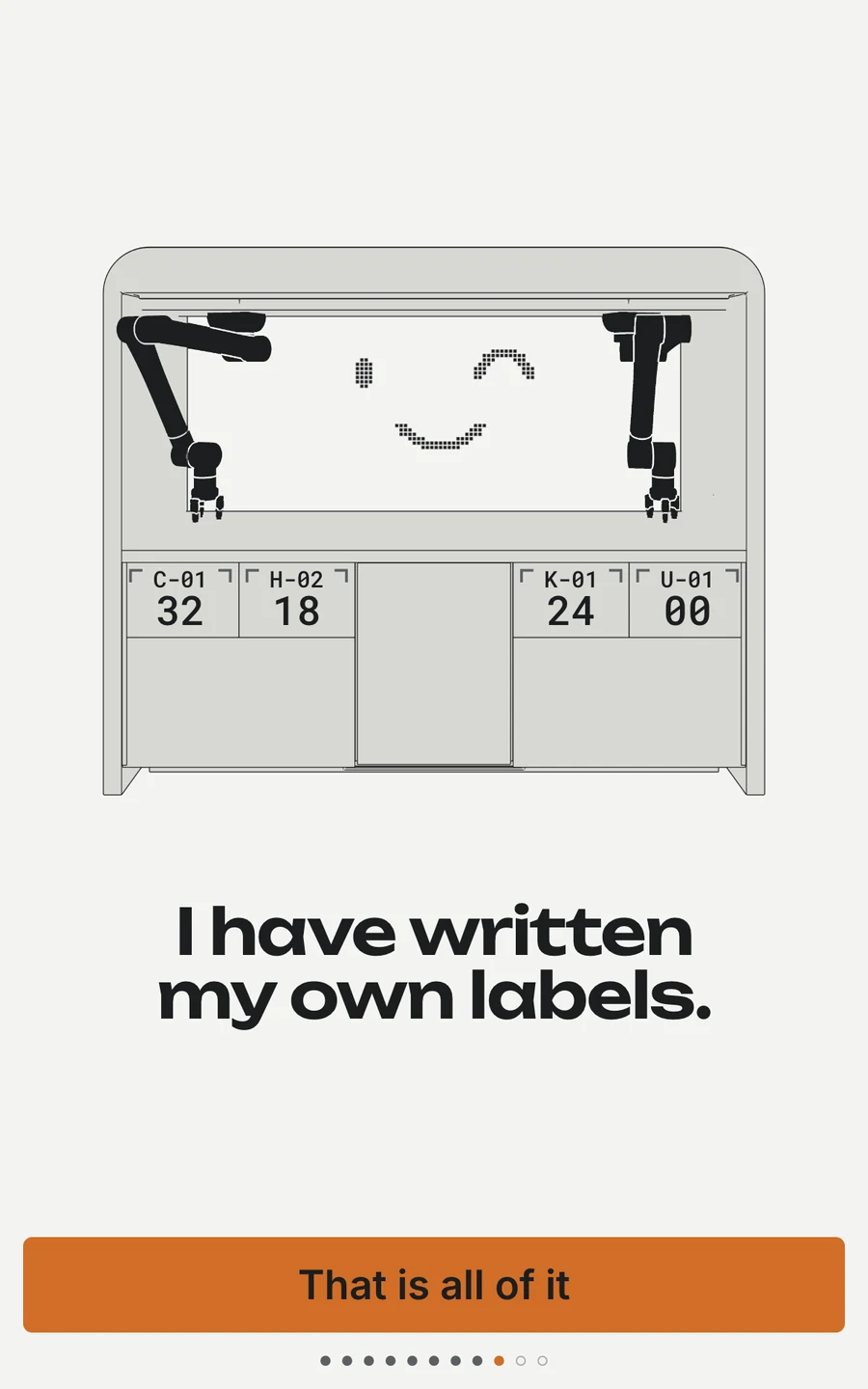
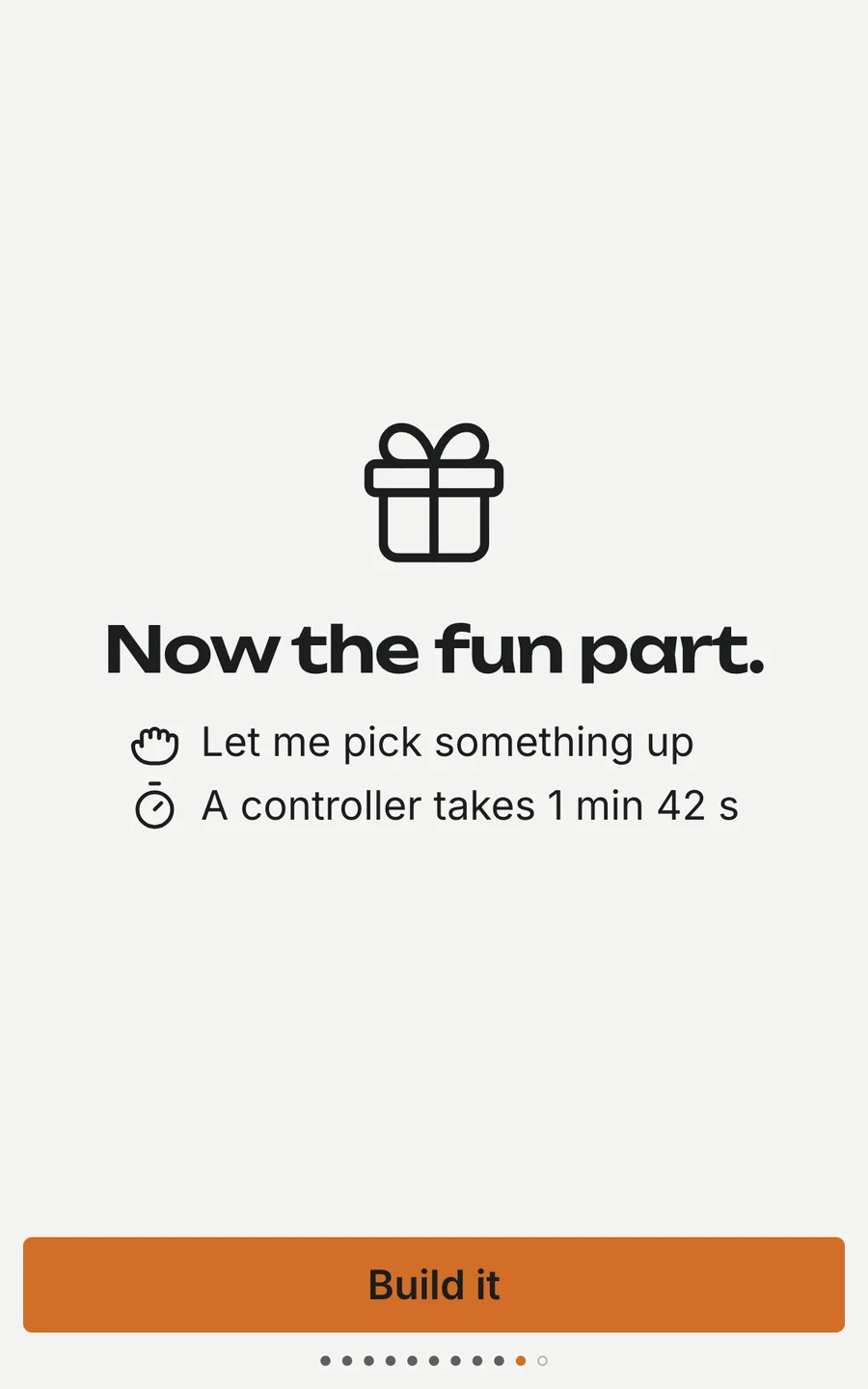
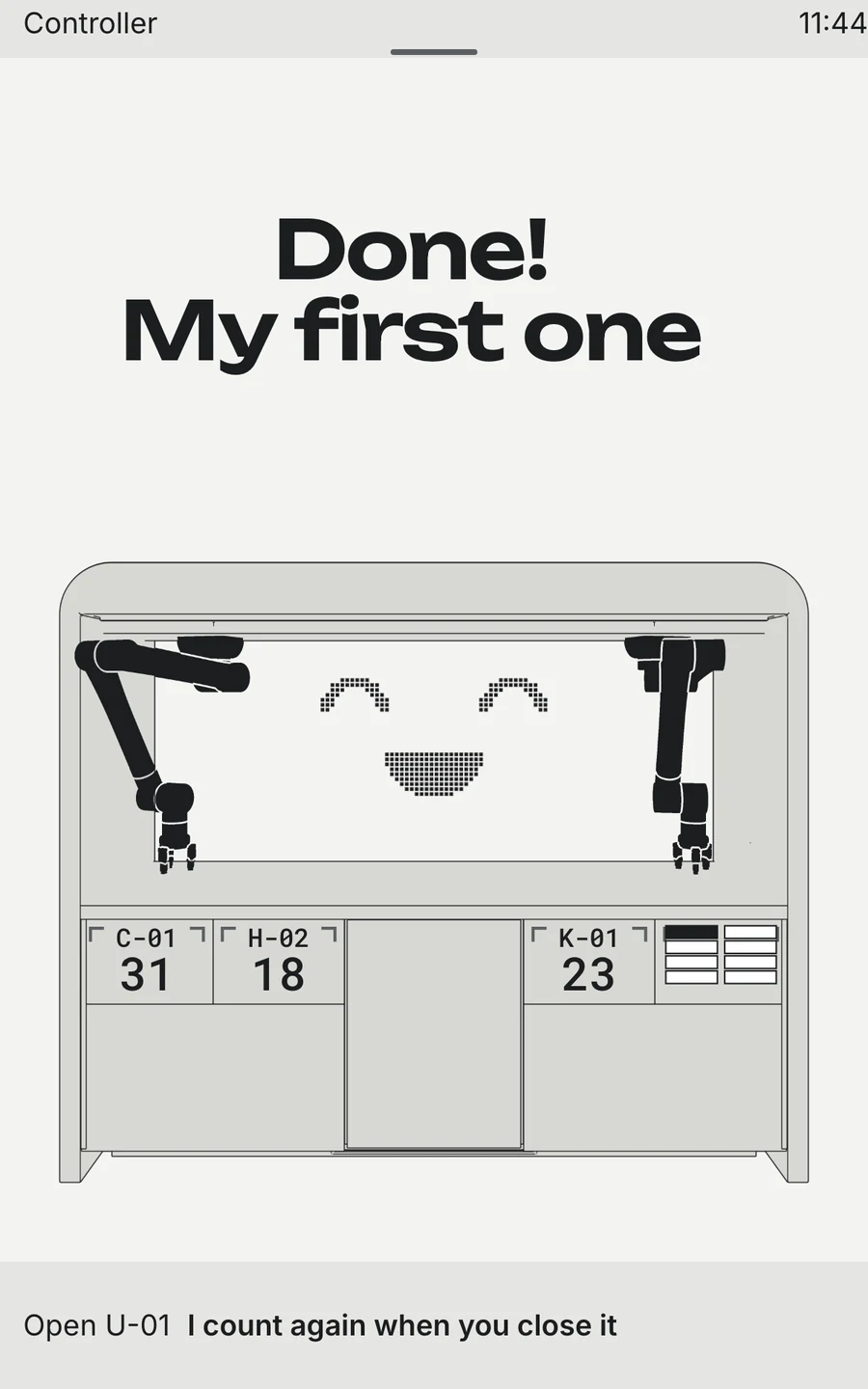
Twelve screens, one thing each. It updates itself, asks you to level it, makes you press the red stop, then builds its first controller while you watch.
Inside
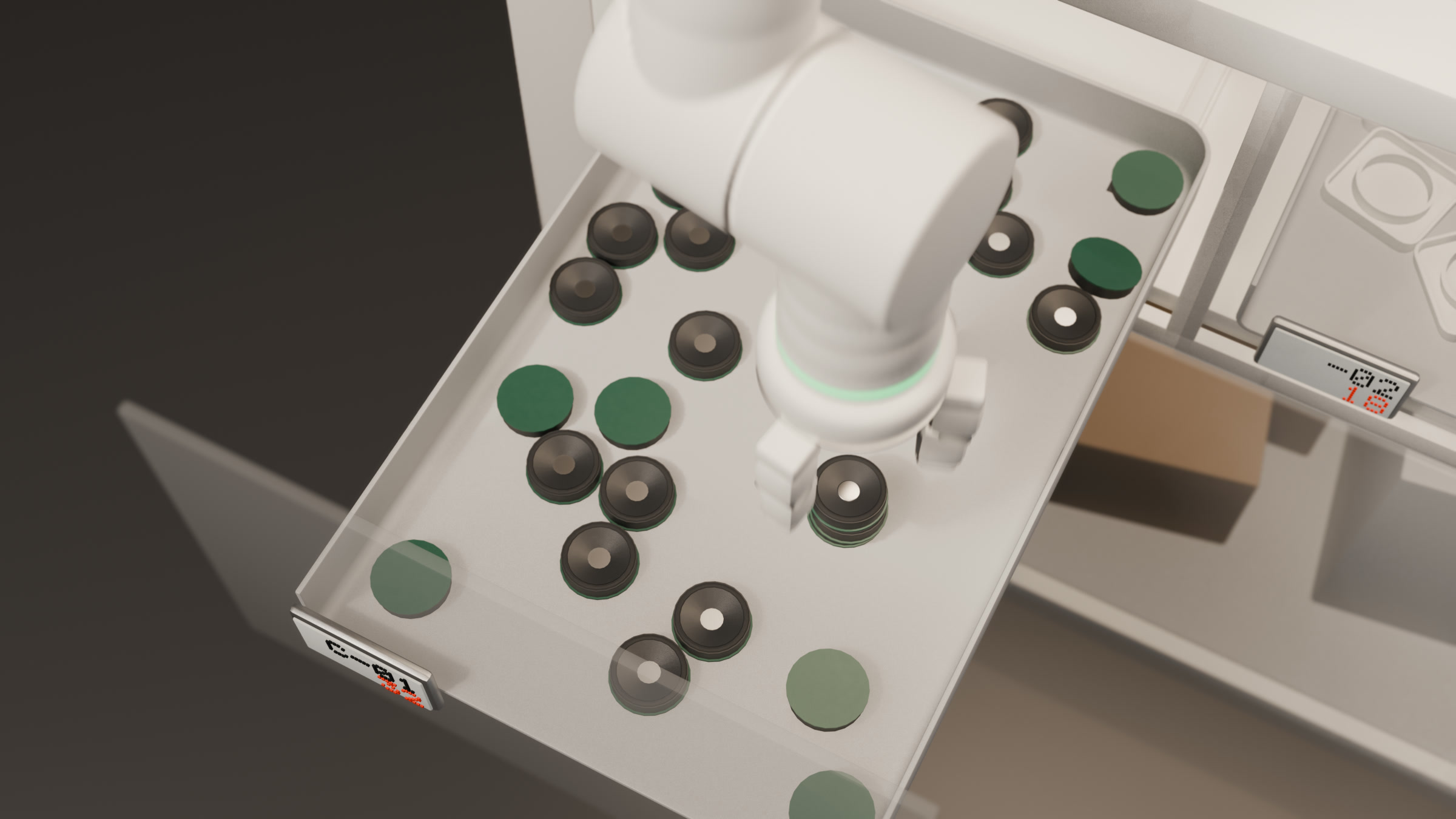
Real mechanics, down to the millimetre.
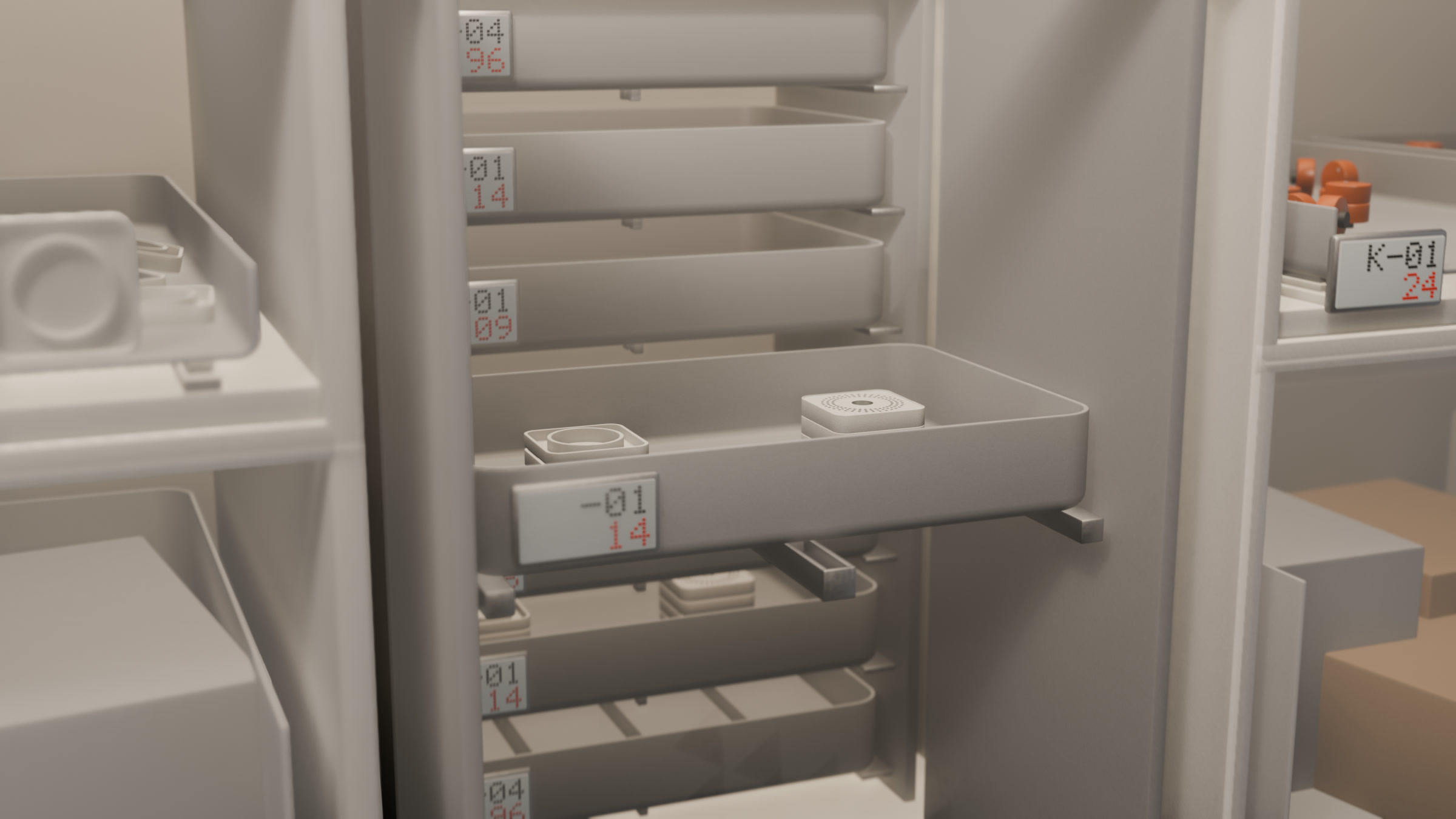
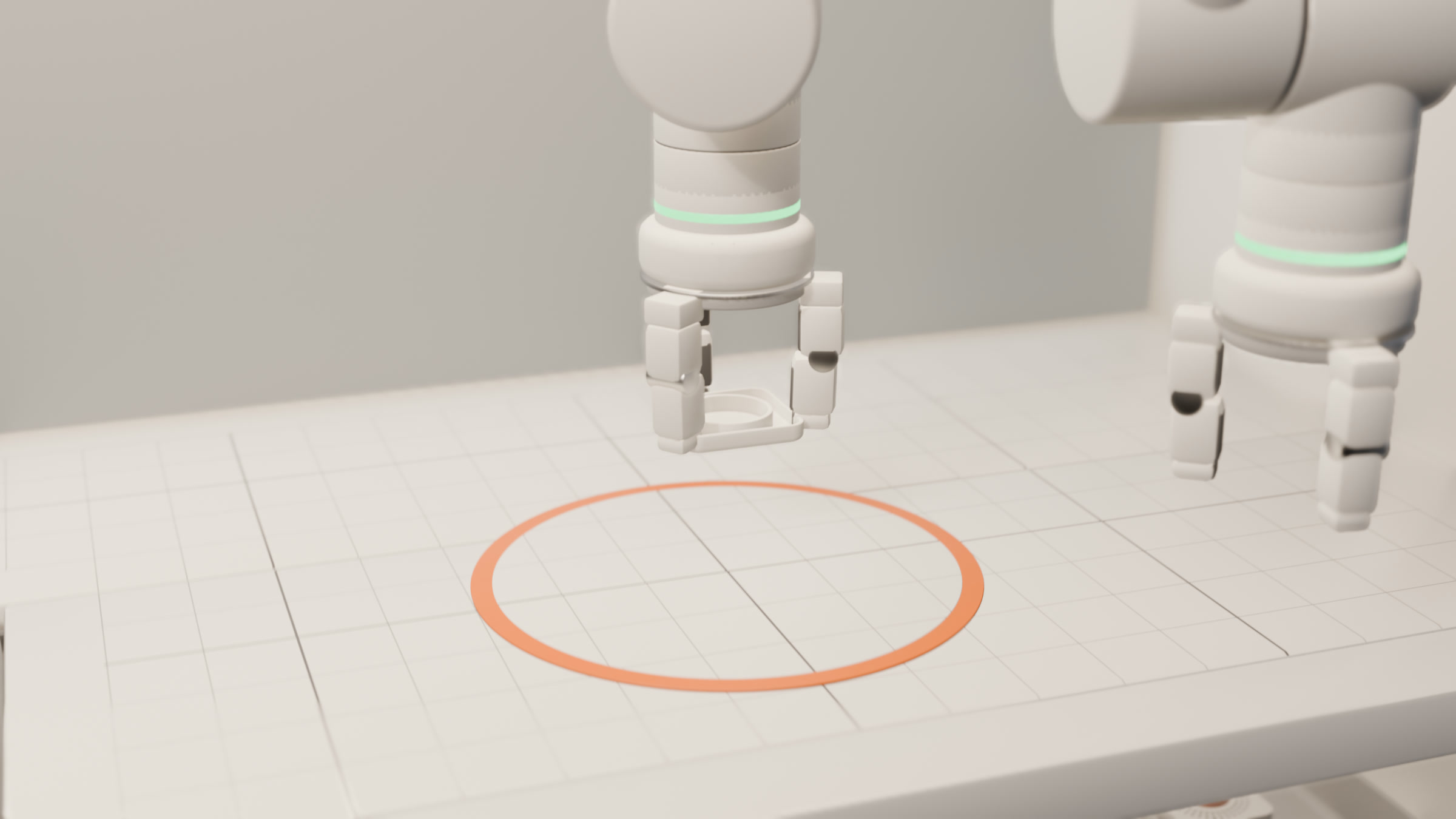
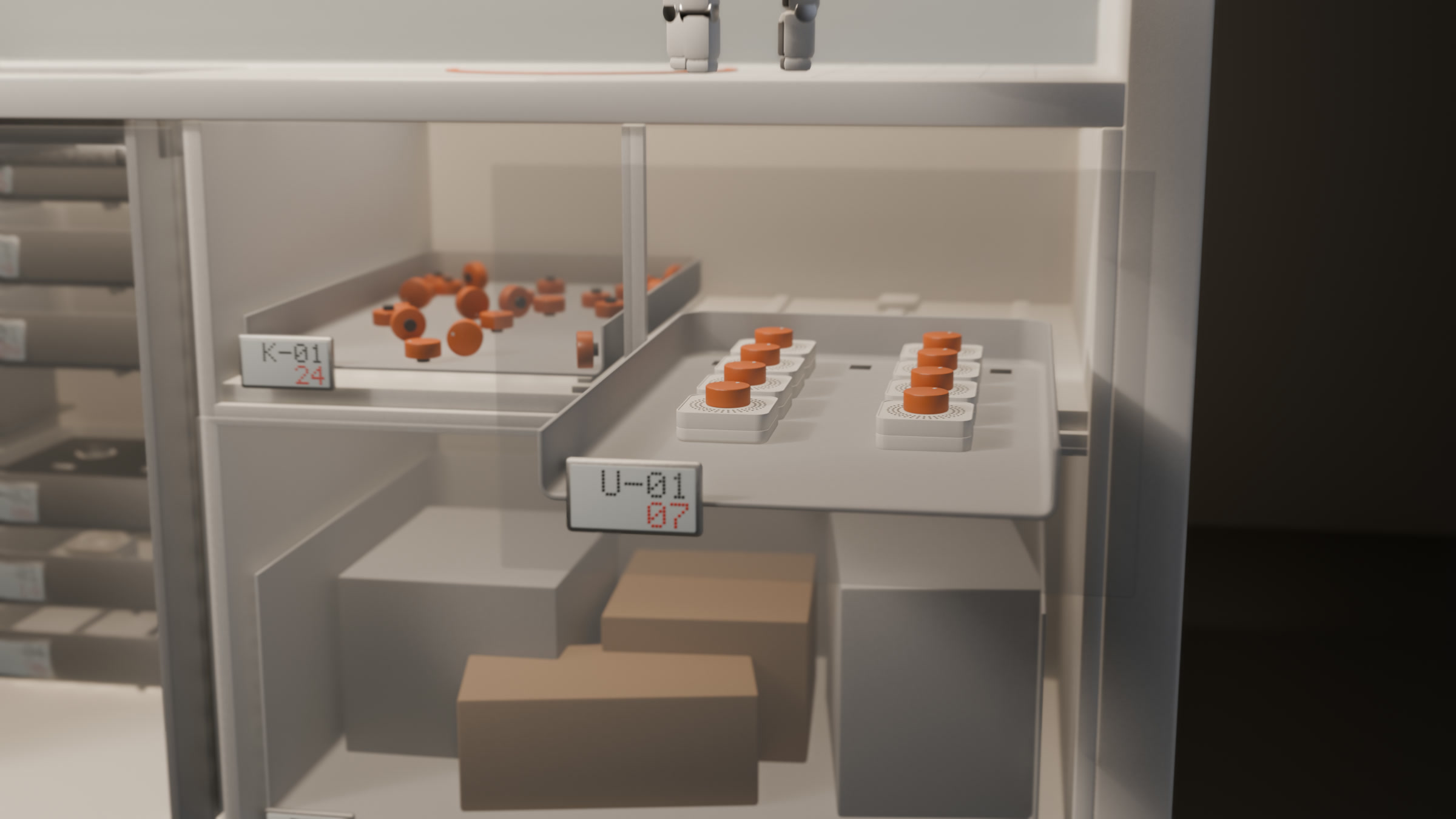
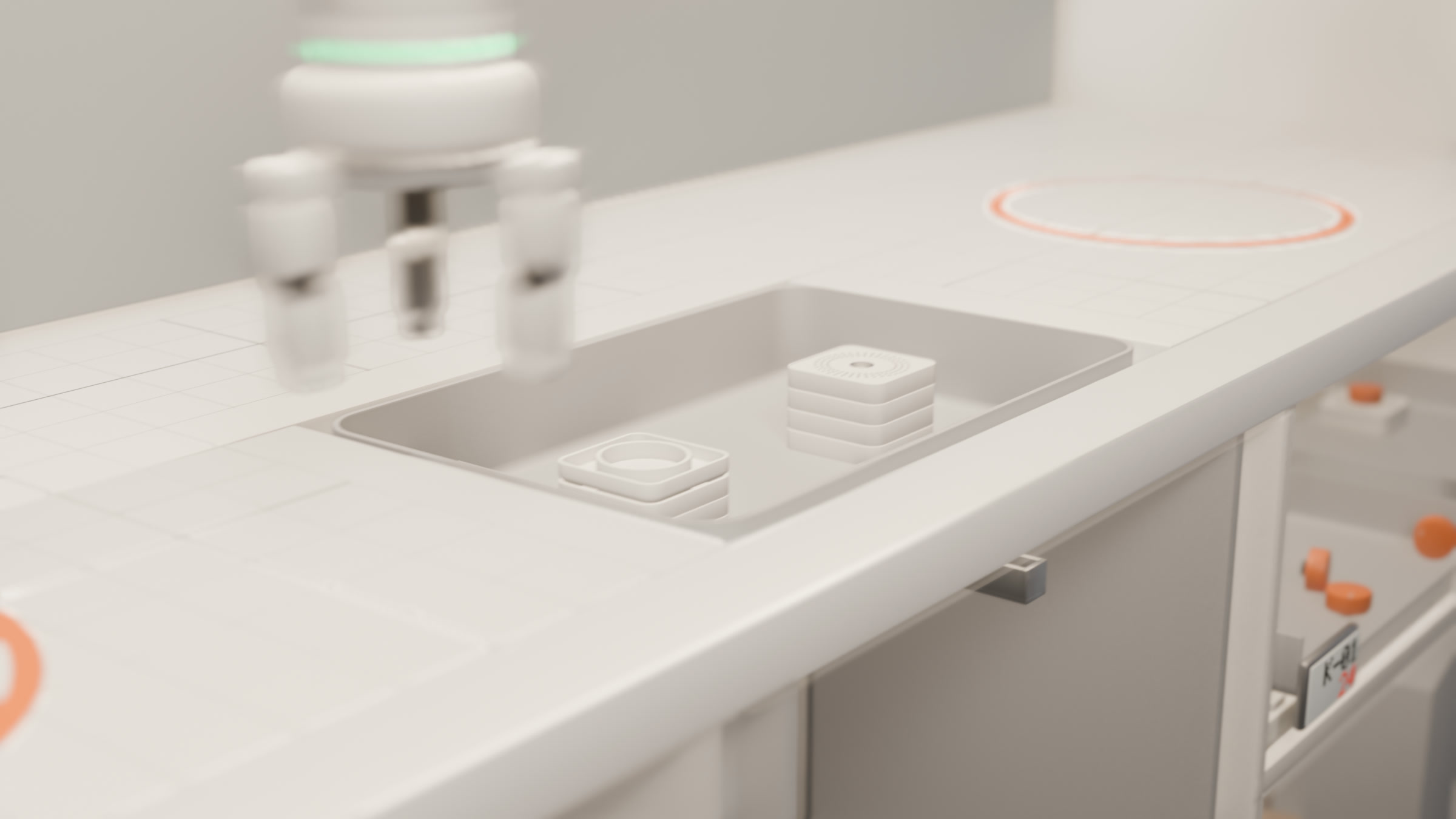
Every runner, tray and finger is modelled to size, and each shot is rendered from the same scene as the film.
Identity
A face made of the wall’s own dots.
The mark is the cell seen from the front: the rounded frame, the opening, and inside it the smile the wall shows when a job is done. One orange dot is the lamp — the only accent, as on the terminal. The wordmark is set in the wall’s 5 × 7 dot font.
Mark

Wordmark

On night

Colour
Type
Faces
Concept‑I
In numbers.
six-axis arms on one shared rail
drawers: four for parts, two for you
trays in the lift at the centre
dots on the e-ink wall, 20 mm apart
millimetres a parts drawer slides out
metres wide, 1.95 tall
A design study, built to be believed.
Geometry, rig, film, sound and every screen come from code.