Memorizun Class. Classroom mode for teachers
A teacher assigns a poem to memorize. A student opens a link and starts — no account required.
Memorizun Class is a classroom mode built into the same app. A teacher creates a class, invites students, and hands out a poem, a passage, a rule, or a definition to memorize. A student opens their link and starts — no account, no app download, no sign-up form.
Everything a student does still runs through the same trainer as regular Memorizun: hide the words, recall them, recite the whole thing out loud, and the app checks you. Class just wraps a roster and a deadline around that.
The roster fills itself in
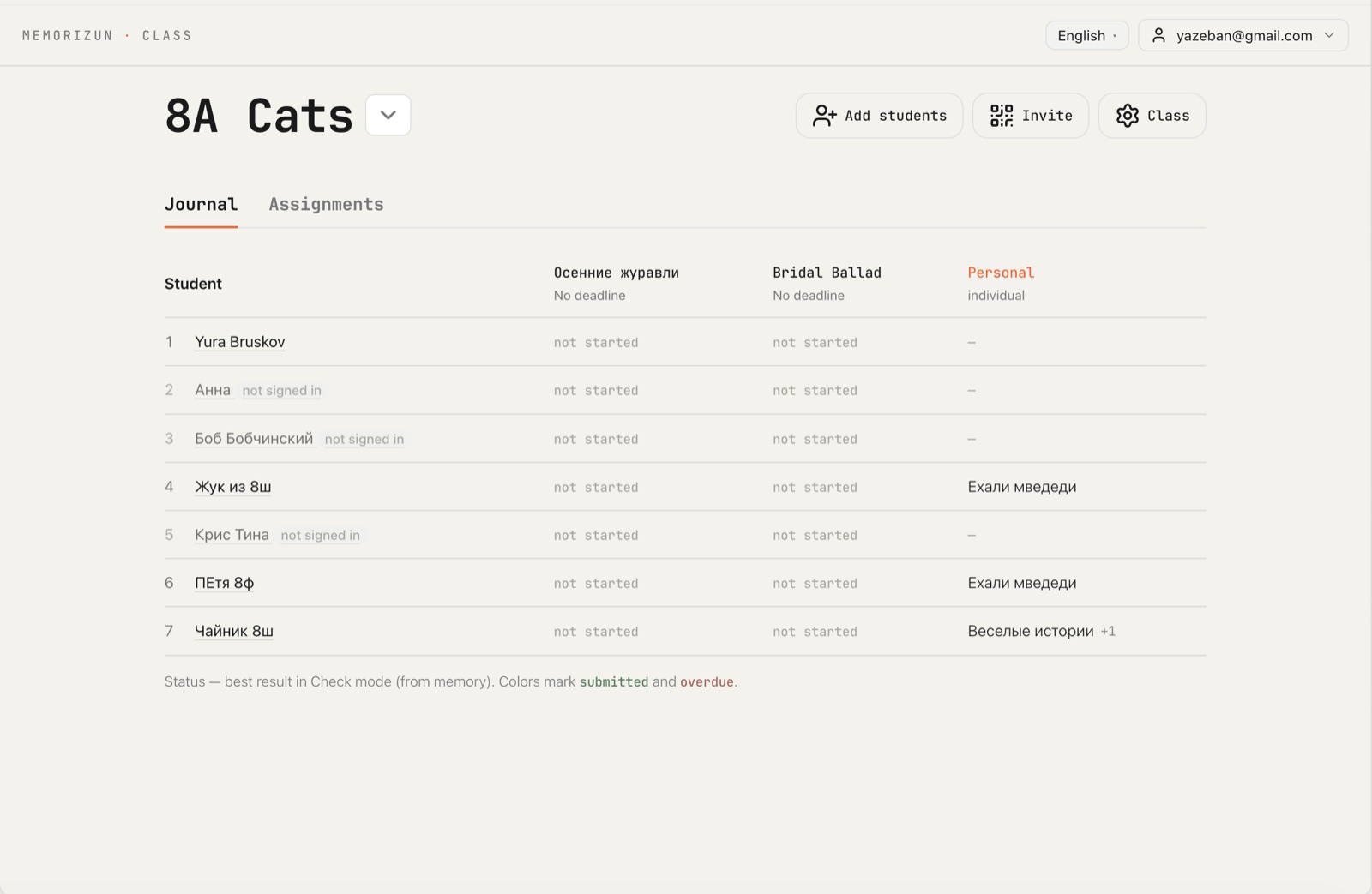
This is the whole thing a teacher looks at: a row per student, a column per poem, and the state of every cell. Nobody fills any of it in by hand. A student's status against an assignment comes straight from the same voice check the rest of the app uses: not started until they press Check for the first time, learning from that first attempt onward, and done only once they've recited the whole thing cleanly — no words revealed by tapping along the way. The roster is really just that number, per student, per poem.
Invite by list
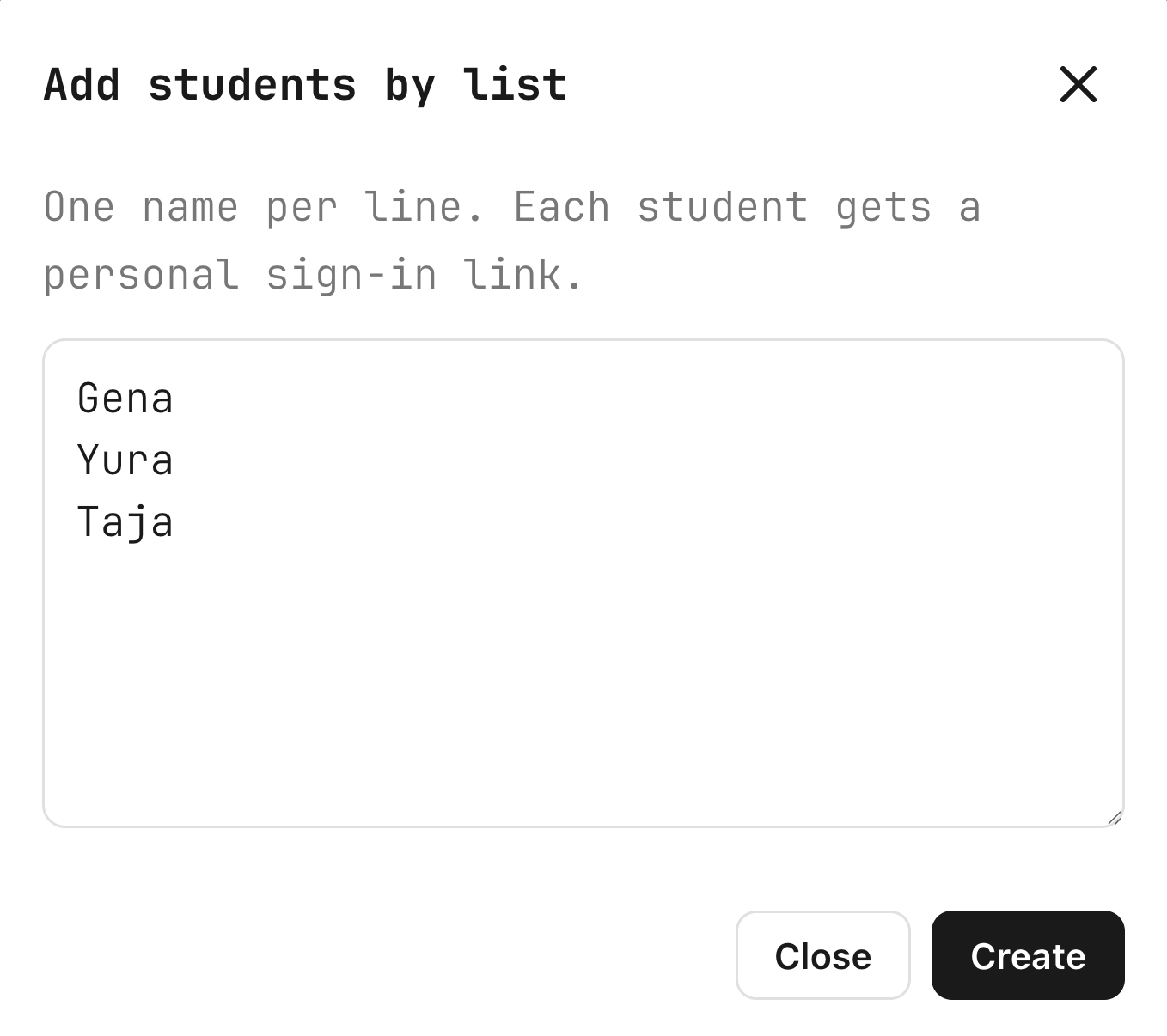
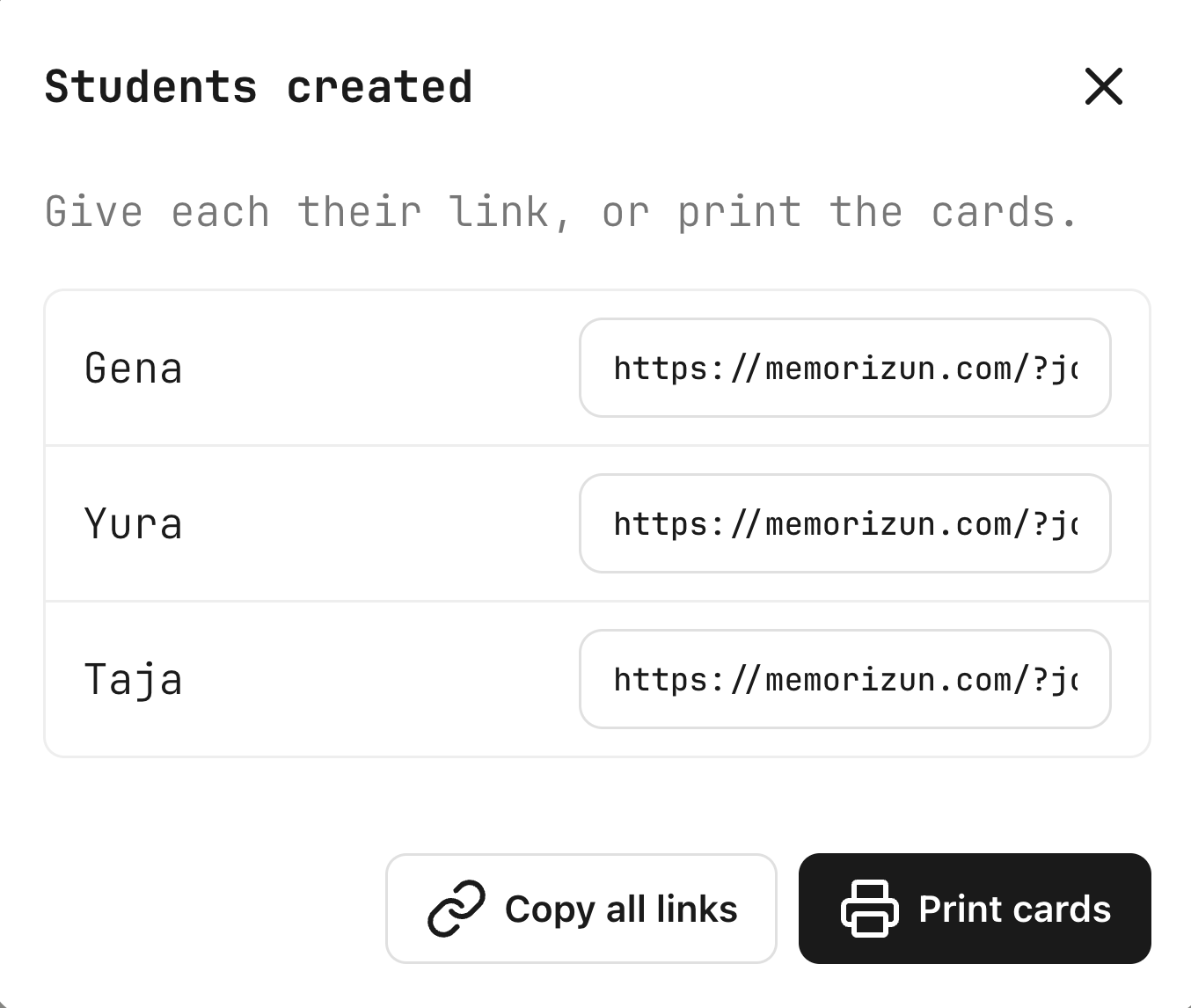
A teacher types names, one per line — no emails, no student accounts to set up beforehand. Memorizun generates a personal join link for each name on the spot.
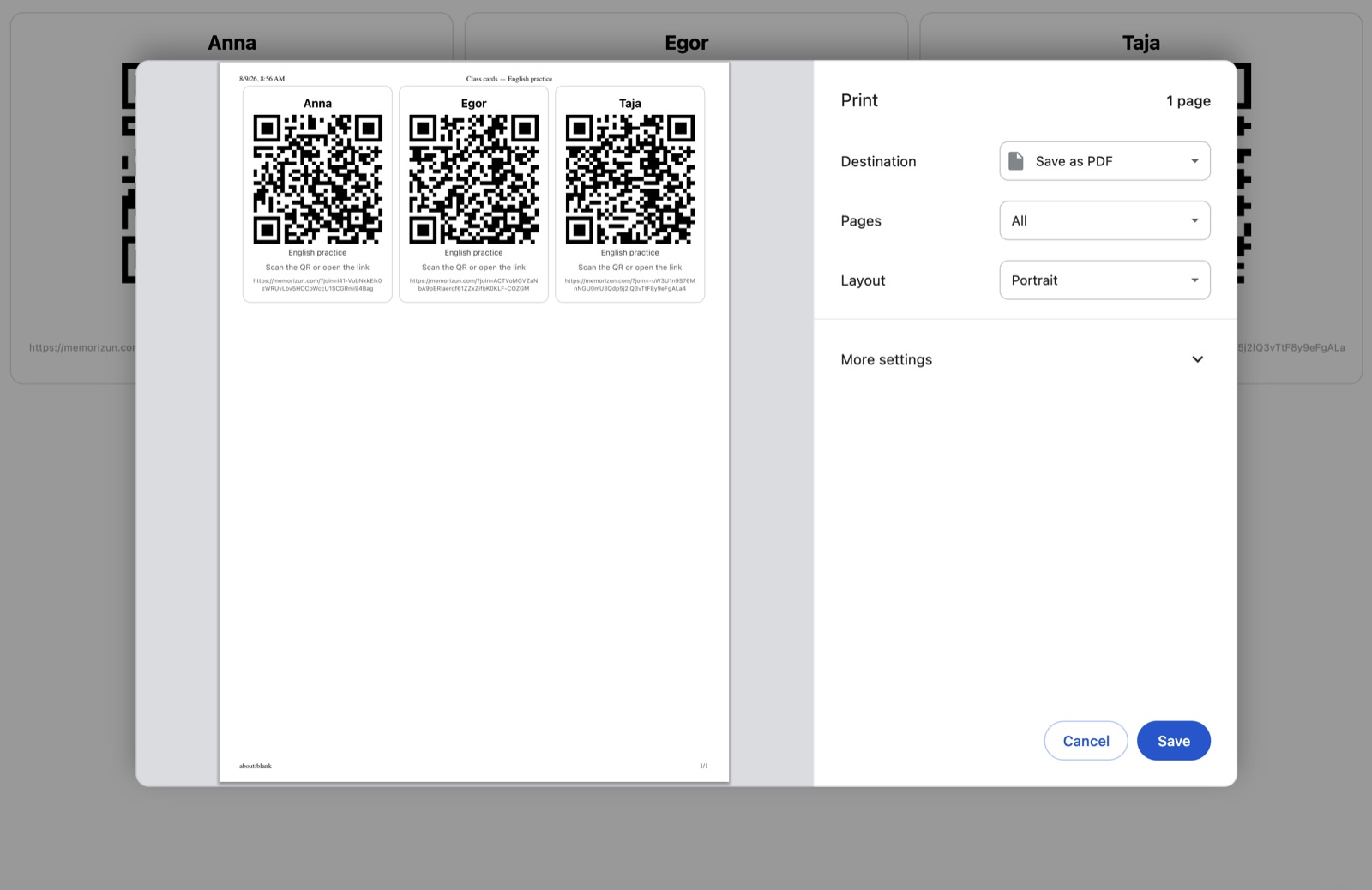
Those links print as a page of QR cards, one per student — a practical answer for a room where handing a typed URL to twenty kids isn't realistic. Scan the code or open the link, and you're in as that student.

Handing out a poem
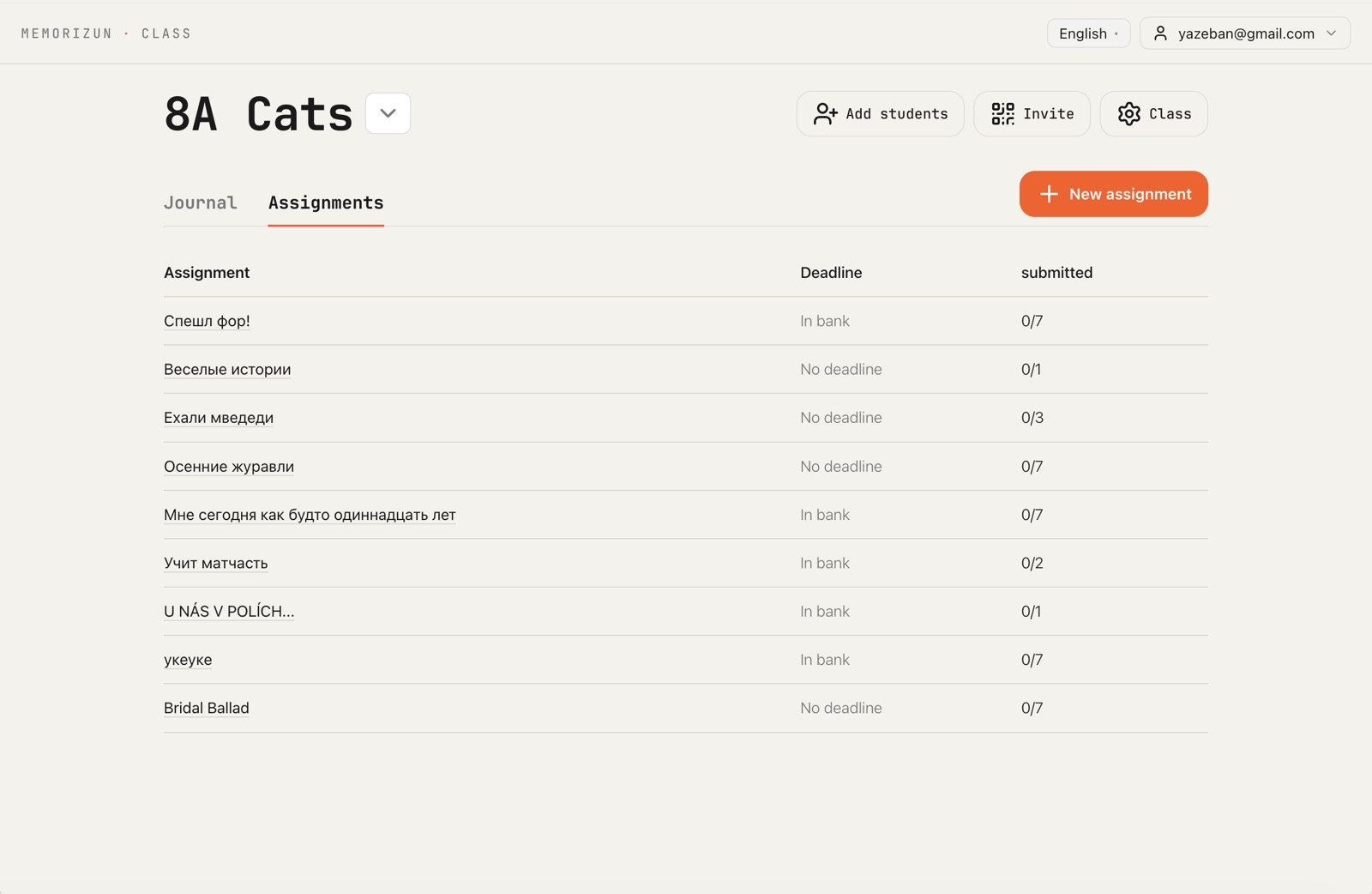
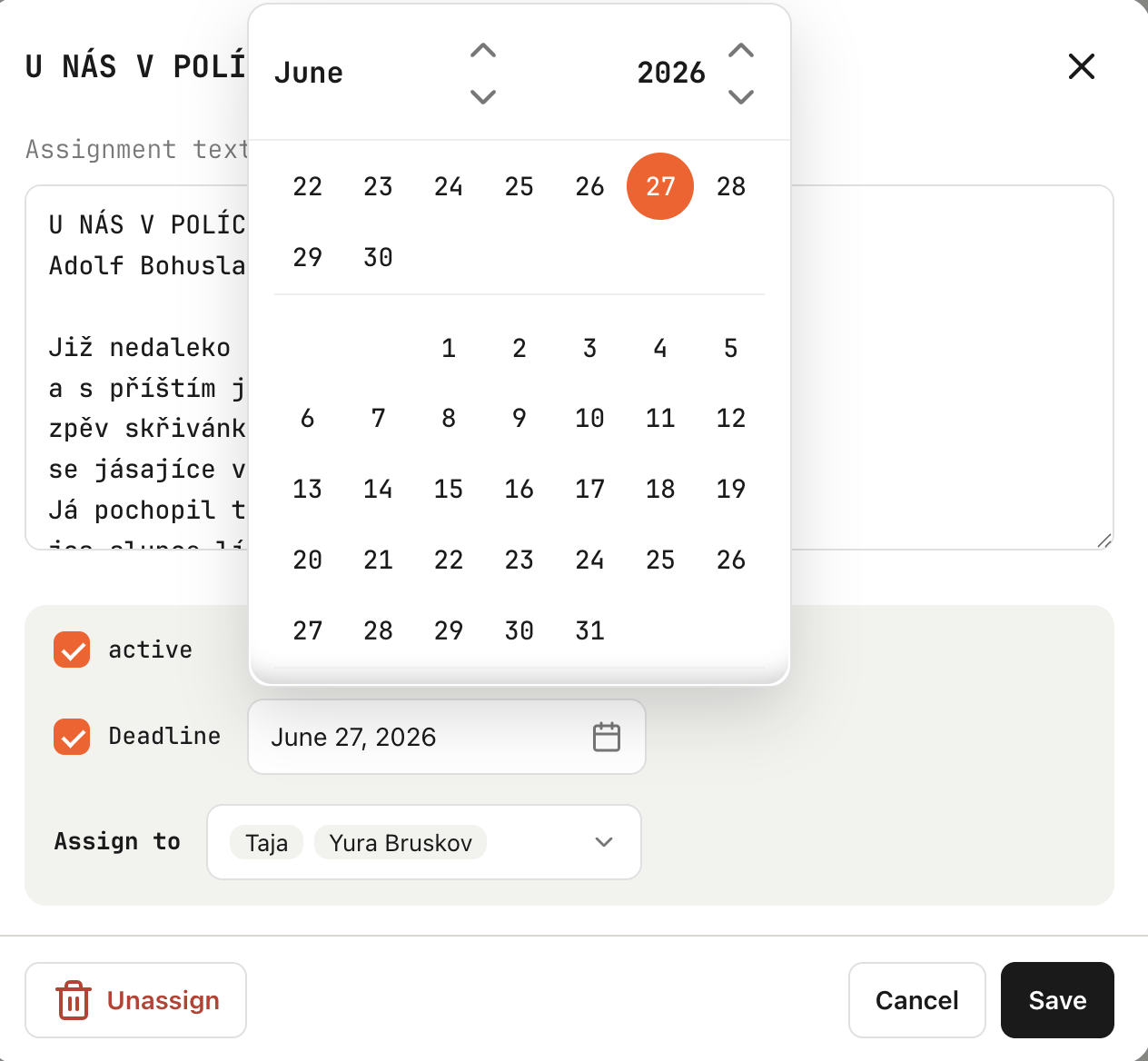
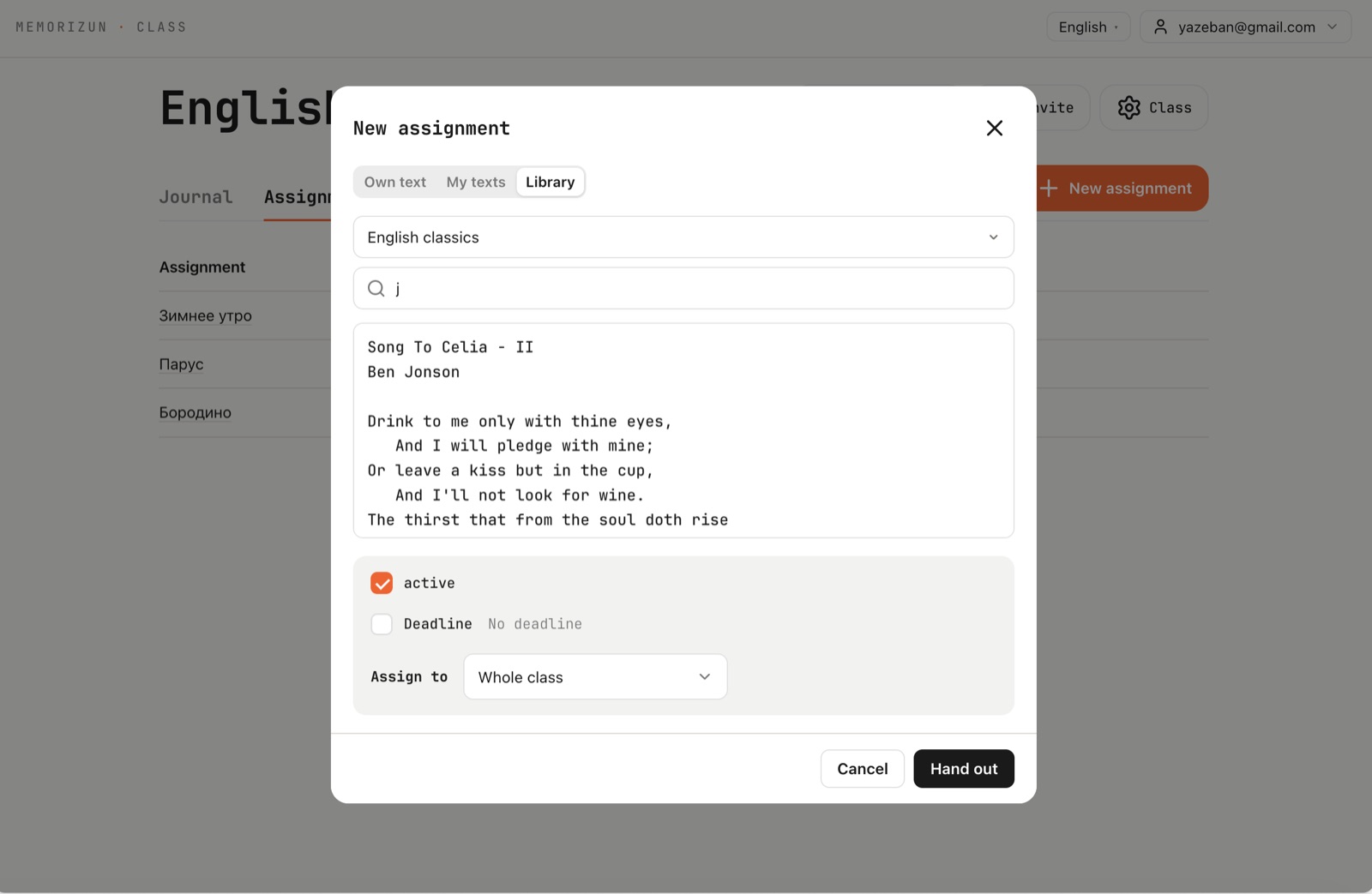
A new assignment can come from three places: type it fresh, pull it from the teacher's own saved library, or pick something from a small catalog of public-domain texts already loaded in — poems that don't need permission to hand out to a class. Set a deadline, assign it to the whole class or to one student, and it's live.
A student's identity is the link, not an account.
No registration, just a link
The first time someone opens a class link, they type a name — that's a label for the roster, not a login. Open the same link again later, on any device, and they're back where they left off. No password involved.
If a student already has their own Memorizun account and happens to be signed in when they open the link, nothing gets typed at all — the class quietly attaches to their existing account instead, and an "Assignments" tab shows up alongside their regular library. Either way in, the assignment itself opens read-only: it's the teacher's text, not something a student can edit, but every practice mode — read, fill, recall, check — works exactly like it does for anything else in the app.
More projects