We live in a world where everyone carries Google Calendar in their pocket. Yet paper planners sell in the millions. Strange?
Not really. It just means that for certain tasks, paper works better. Not because of nostalgia or "the good old days"—but for entirely practical reasons you can feel immediately.
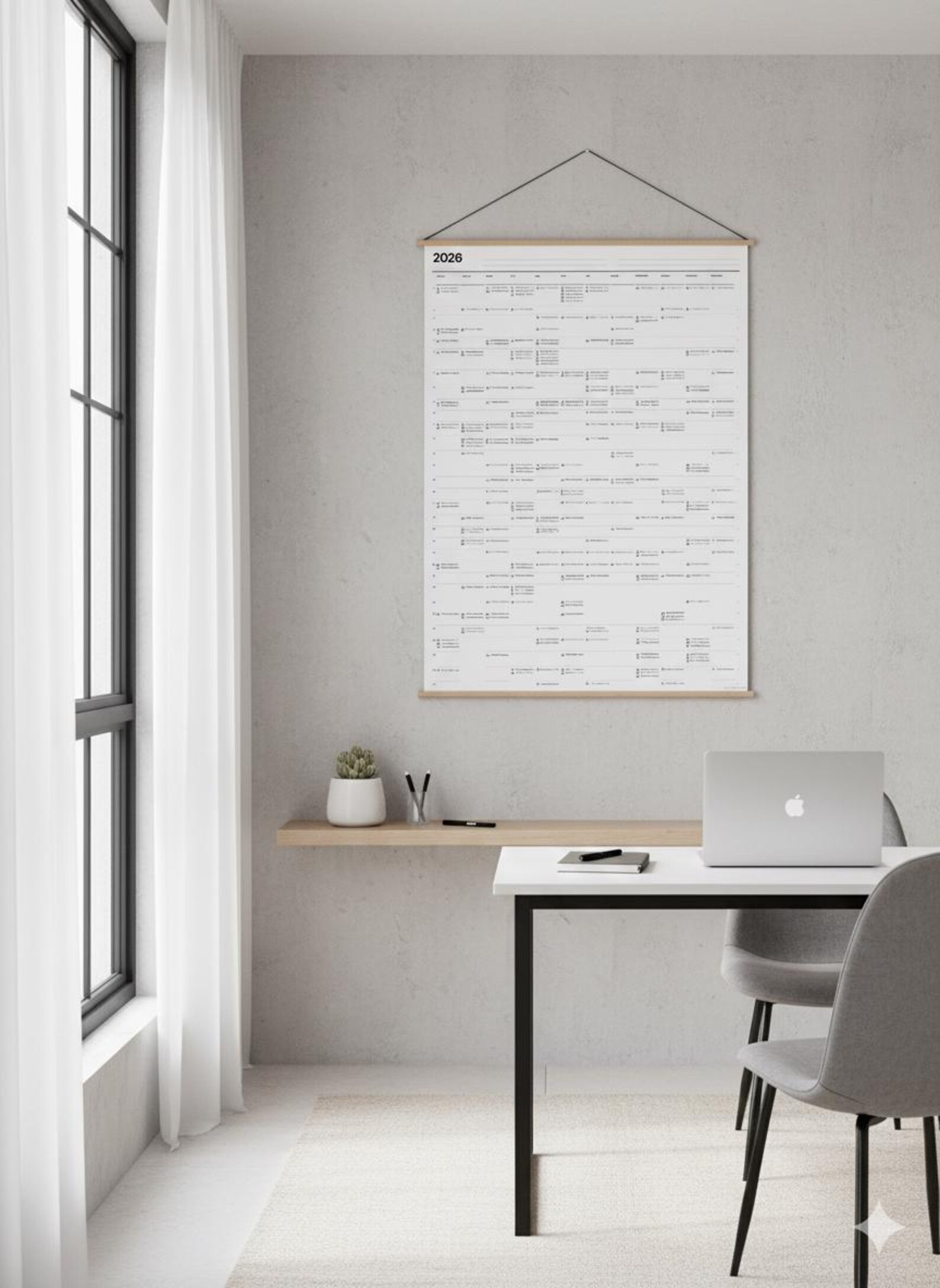
The whole year, right there on your wall
Here's the thing about digital calendars: you can't see the whole picture. Even on a big monitor, you're scrolling. Your phone? Forget about it. But hang an A2 planner on your wall, and suddenly you can see your entire year at a glance.
This changes how you think. You start noticing patterns. "Huh, March is always crazy." "There's a gap between projects in June—perfect for that vacation." You make better decisions because you can actually see the big picture, not just next week's meetings.
Real story: Freelancer
A designer friend noticed that February always had fewer clients. So now she saves money in January. No more scrambling to pay rent. She spotted the pattern only because she could see the whole year on her wall.
Or take just one month with you
The yearly view is great for strategy, but sometimes you need to dive deep into a single month. That's where the A4 format shines. One regular sheet of paper, two columns (days 1-16 and 17-31), plenty of space for notes.
Print January for exam prep. Print May for project deadlines. Print July for vacation planning. After the month ends? Toss it, print the next one. No guilt about wasting an expensive planner if your plans change.
Student life
You print December with all your exam dates. It sits on your desk while you study. No phone buzzing with notifications. No accidentally opening Instagram when you meant to check your calendar. Just you, your books, and a simple piece of paper showing what needs to happen when.
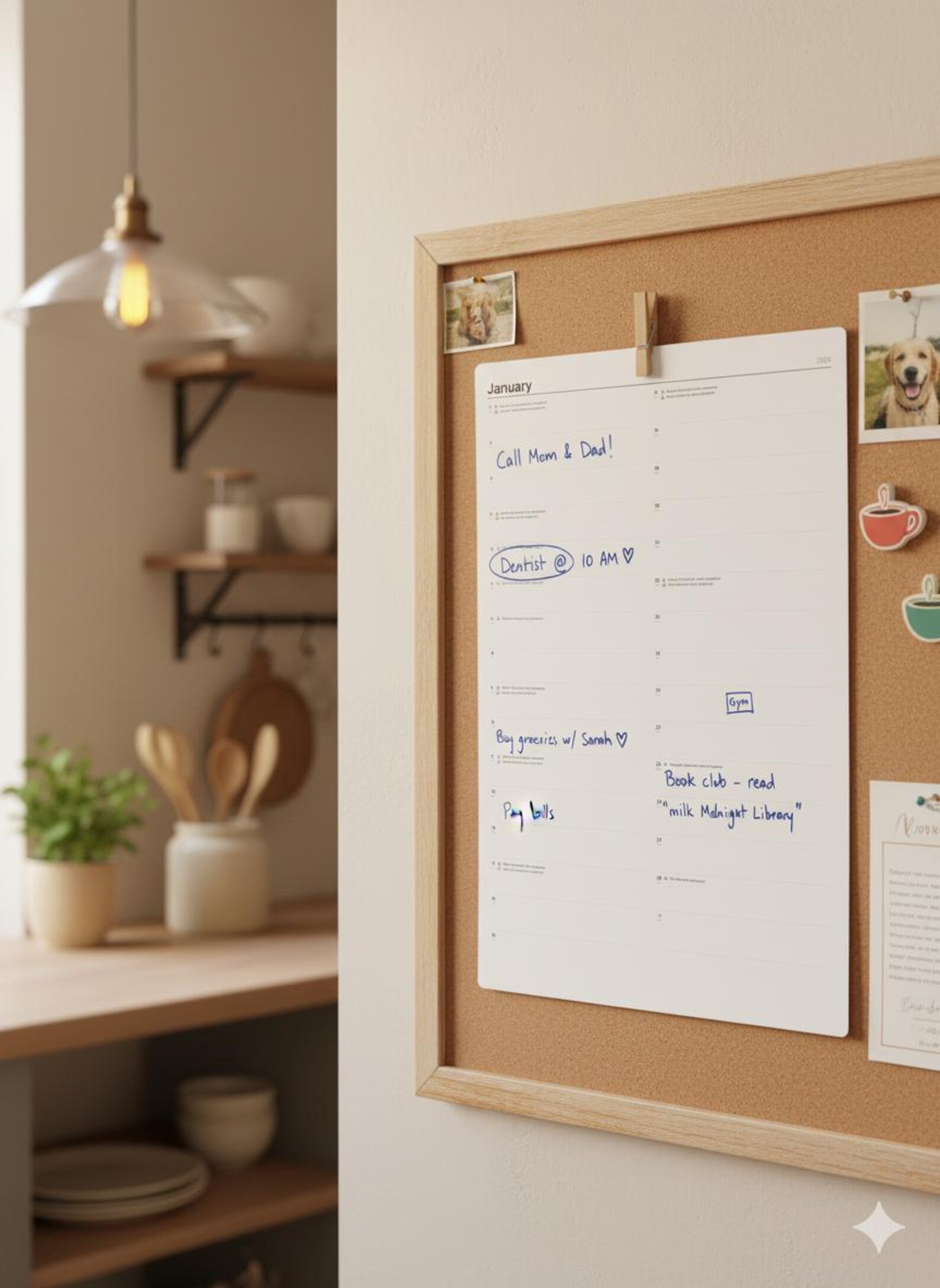
Never forget a birthday again
Digital calendar notifications are easy to dismiss. Swipe, gone, forgotten. But a birthday marked on a planner hanging on your wall? You see it every time you walk by. In February, you notice "Mom's birthday March 15." You have time to think about a gift, not panic-buy something the night before.
Even better: you start seeing clusters. "Whoa, four birthdays in April." Financial planning, right there. You save ahead instead of wondering where your money went.
For families, a shared planner on the fridge means everyone knows. Grandma sees all the grandkids' birthdays. Your kids learn to remember important dates without having to check their phones.
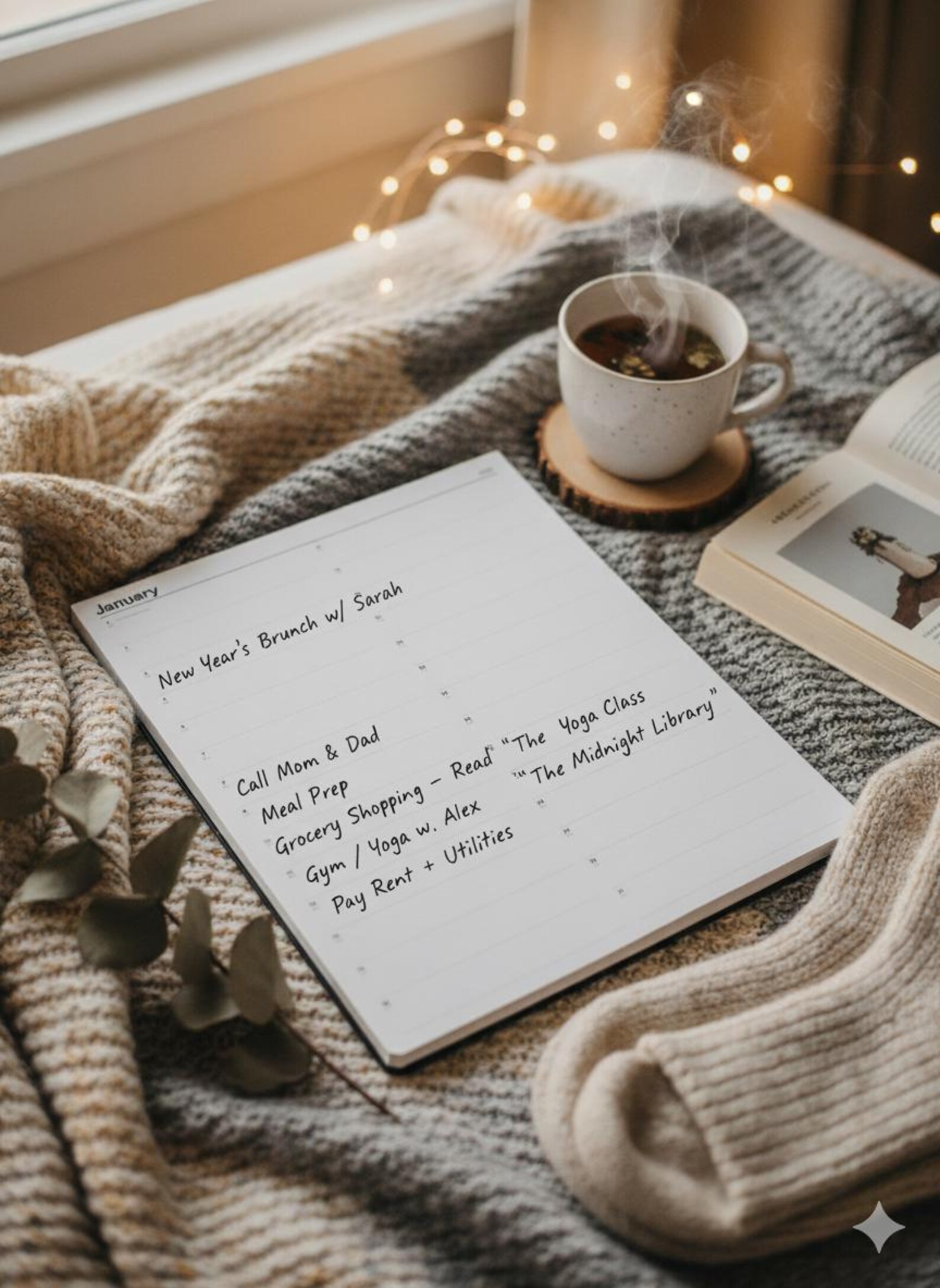
The hybrid approach: don't choose, combine
The main pushback I hear: "But I have to write everything twice?" Nope. Planner A2 imports your Google Calendar events. Birthdays from your contacts? Imported. Regular meetings? Imported. That vacation you booked? Imported.
You print a planner that already has your key events filled in. Then you add by hand only what matters—your goals, your notes, your thinking. Use Google Calendar for the day-to-day routine. Use the paper planner for the stuff you actually want to remember and think about.
Digital for tactics, paper for strategy. That's the sweet spot.
Who actually uses this?
Freelancers
See your busy and slow periods across the whole year. Plan your finances accordingly. Book vacations when it makes sense, not just when you feel burned out.
Families
School holidays, work vacations, kids' activities, birthdays—everything in one place on the fridge. No more asking five times "When's our vacation again?"
Students
Exams, assignment due dates, project deadlines. See it all laid out. Know exactly how much time you have. Start earlier instead of cramming.
People with ADHD
Digital calendars are too easy to ignore. Close the tab, out of sight, out of mind. A sheet on the wall? It's always there, gently reminding you what needs attention.
Teams
Put it on the office wall. Everyone sees the project timeline. Move dates with a marker in real-time during meetings. Way more tangible than staring at a projector.
When it doesn't work
Let's be honest: paper planners aren't for everyone. If you're constantly traveling, an A2 sheet isn't practical. If you need calendar alerts every 15 minutes, stick with digital. If your job requires instant updates and notifications, paper won't cut it.
Paper planners are for the big picture stuff. Strategy, goals, patterns. They're meant to complement your digital calendar, not replace it. Think of it this way: your phone handles the "what's next," your planner handles the "where am I going."
Try it free
Choose your format (A2 or A4), pick your language, import your events from Google Calendar, and print your 2026 planner.
Create Your PlannerFree. No registration. Works in your browser.