Yura Bruskov

Senior Product Designer. End-to-end design for B2B SaaS — collaboration, monetization, complex enterprise flows. AI-augmented workflow I designed and now maintain for the team. On the side I build fun pet projects — 9 mobile apps independently shipped to the App Store, plus a stack of weird web experiments.

01AI Design Workflow

I designed the workflow itself. Everyone on the team had started using AI and nobody was using it the same way twice, so I built the system that makes a design task repeatable: five agent skills that carry it from kickoff through the work to dev handoff, an append-only decision log holding the middle together, and onboarding written for designers who never open a terminal. Self-initiated, no mandate, roughly six months of iteration.
AI design workflow: the kickoff skill running in a terminal next to the decision log

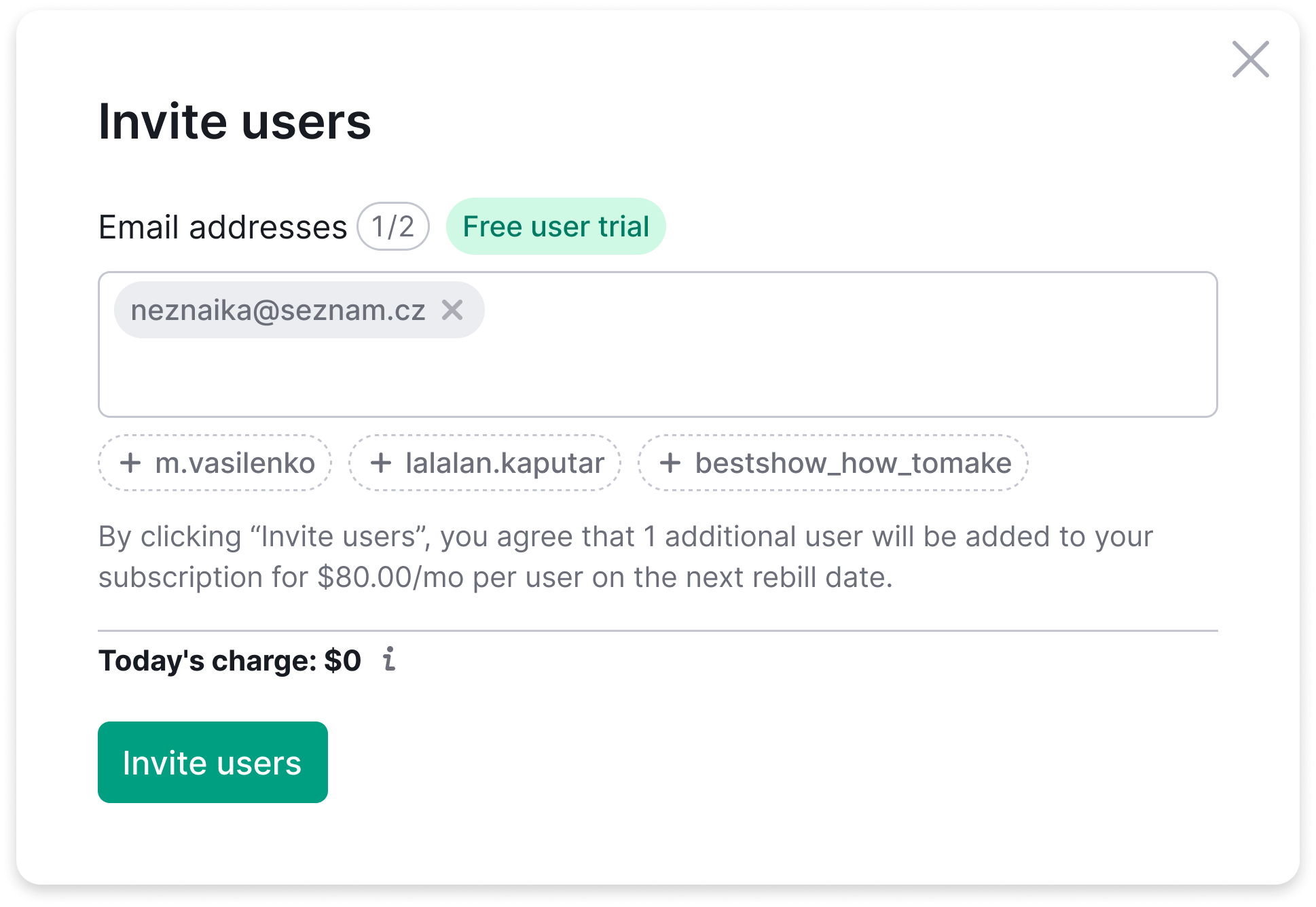
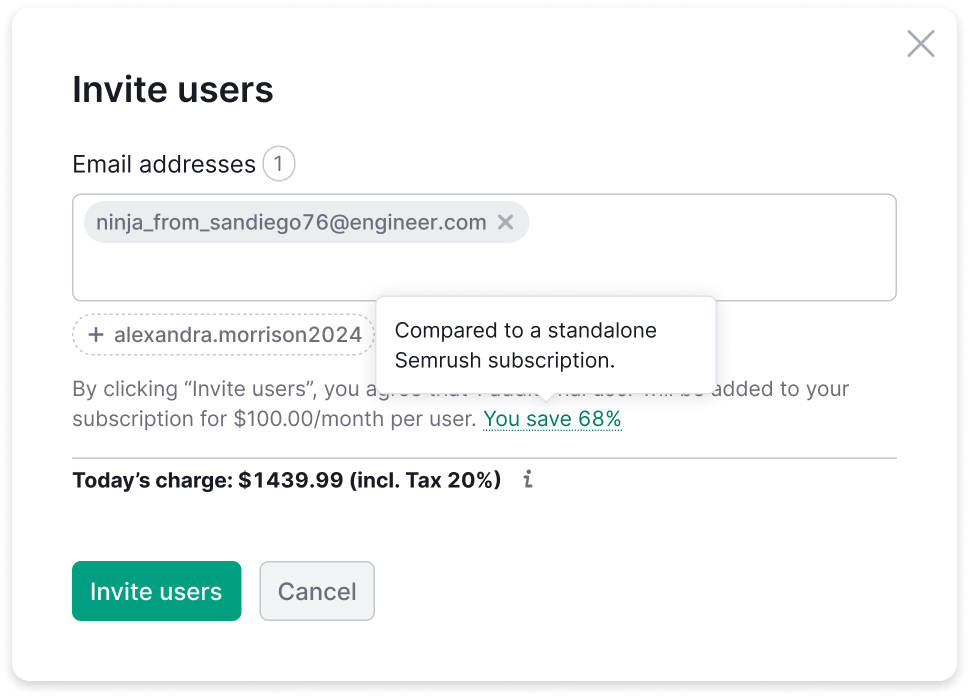
02Guests, Invites and Pricing

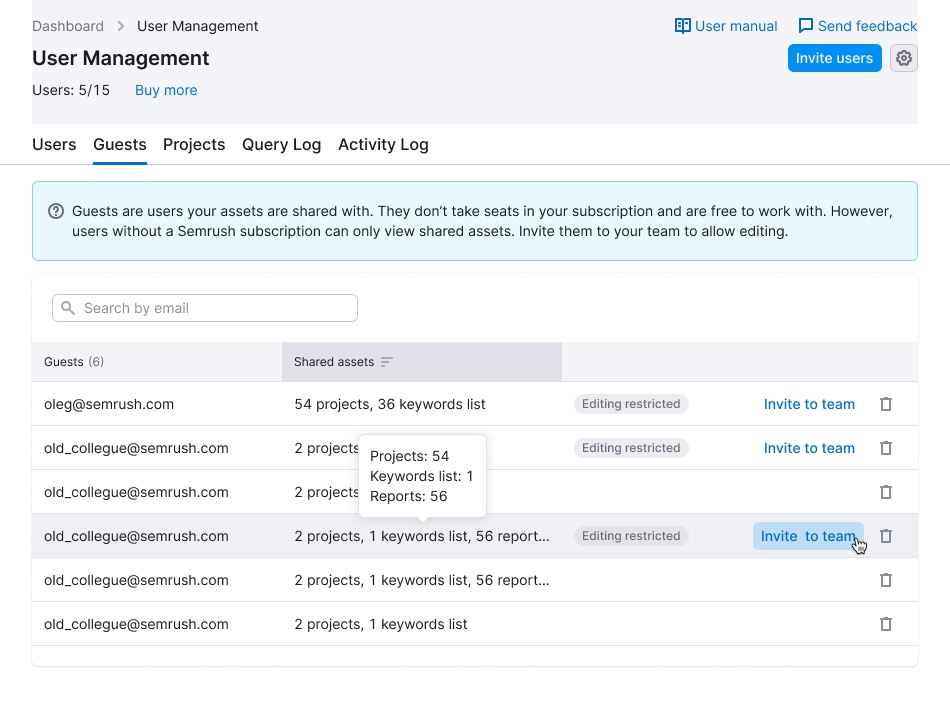
Three pieces of the same flow, done one after another. Guest management rebuilt around what people actually came for, invite suggestions so nobody has to type an address from memory, and one attempt at making the price read as a deal instead of a surprise.

Guest management flow Same-domain invite suggestions Value-for-money messaging on the seat price

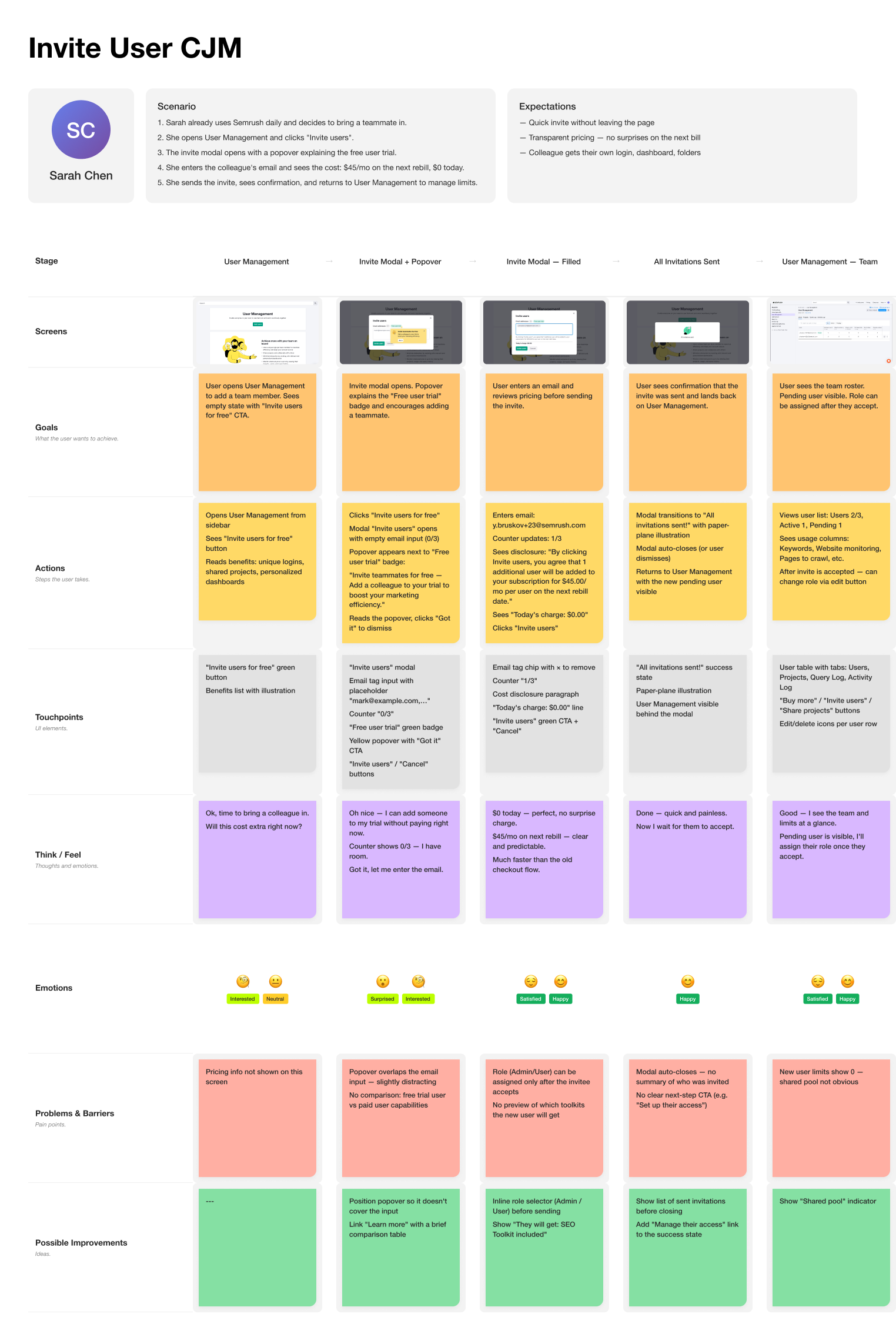
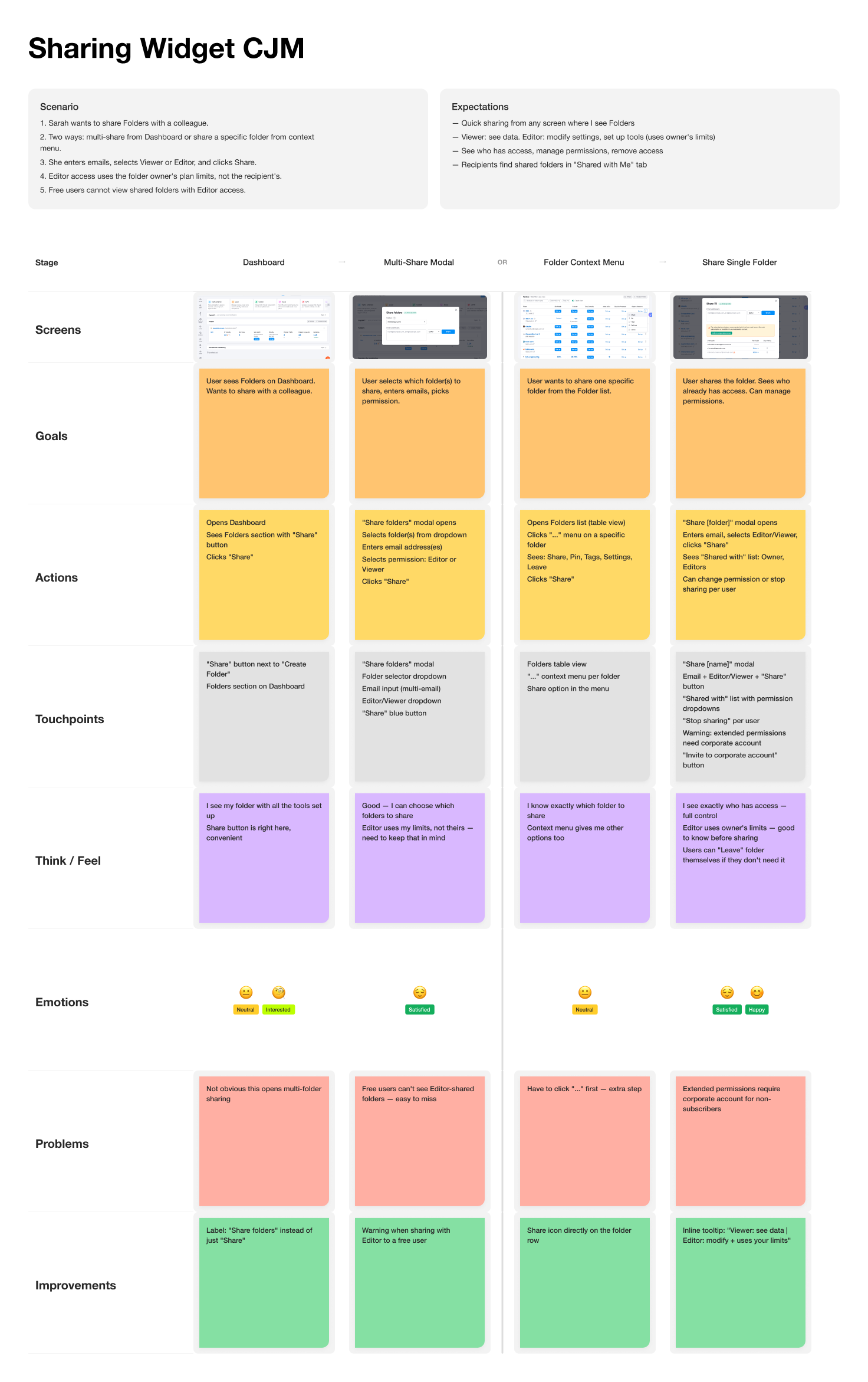
03Collaboration CJM

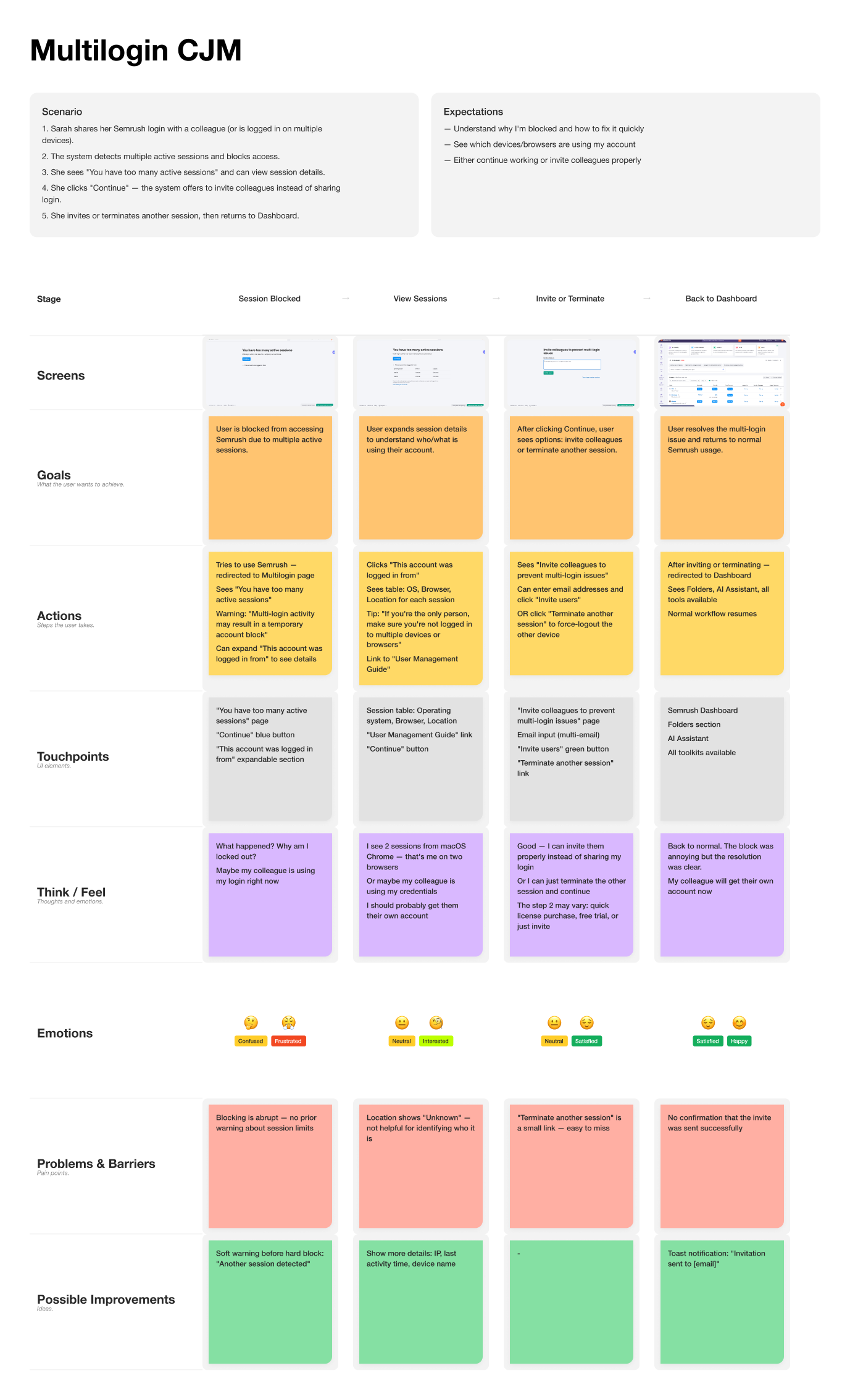
Asked to map the collaboration area — sharing, inviting, guest management, multilogin — into a single CJM. Until then, each was being designed in isolation. Built it in Figma with real screenshots at every step across 4 scenarios. Turned out to be the artefact the team kept coming back to.

Collaboration CJM: the invite flow mapped step by step Collaboration CJM: the sharing flow with pain points marked Collaboration CJM: the multilogin flow

04CSAT Survey Widget

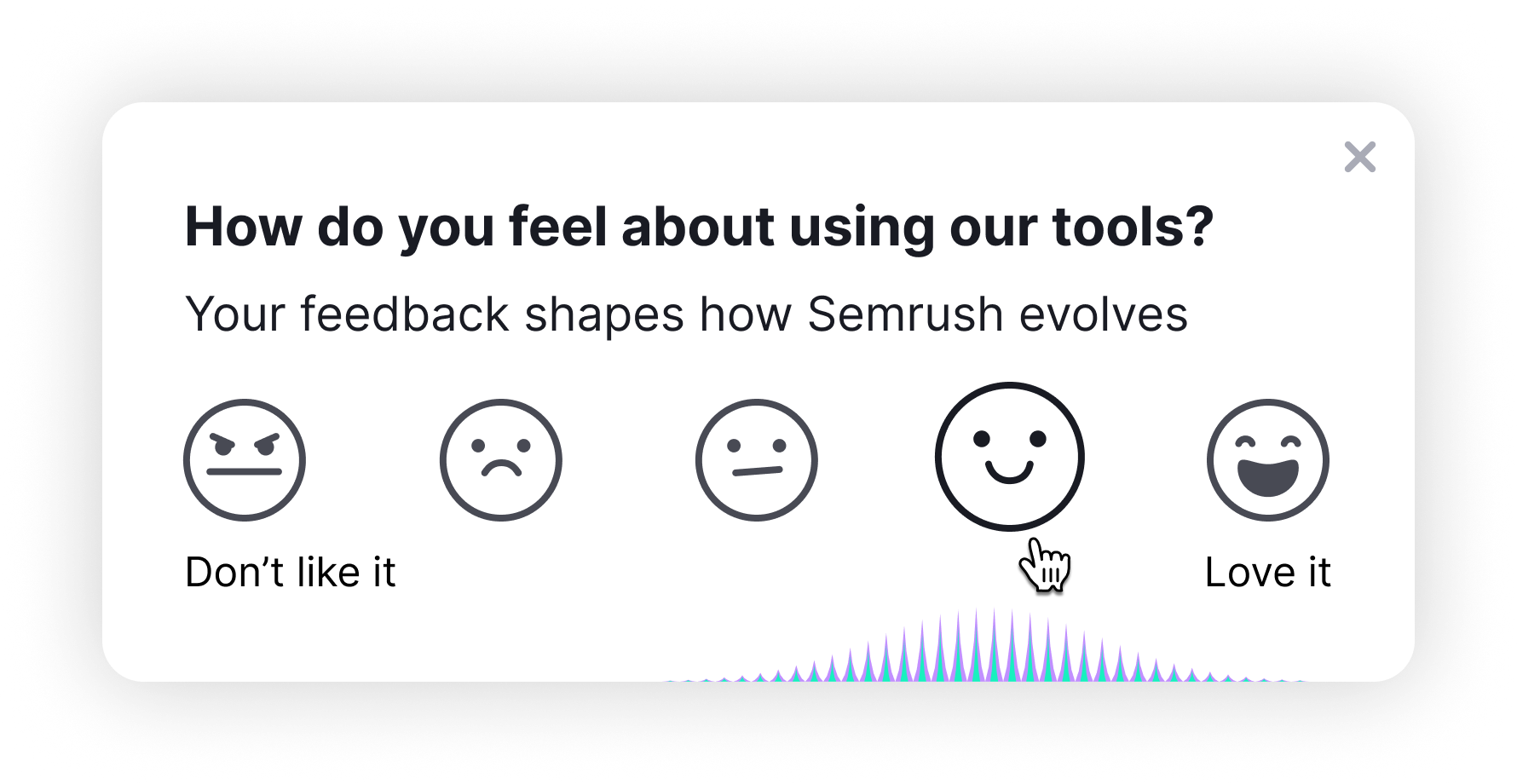
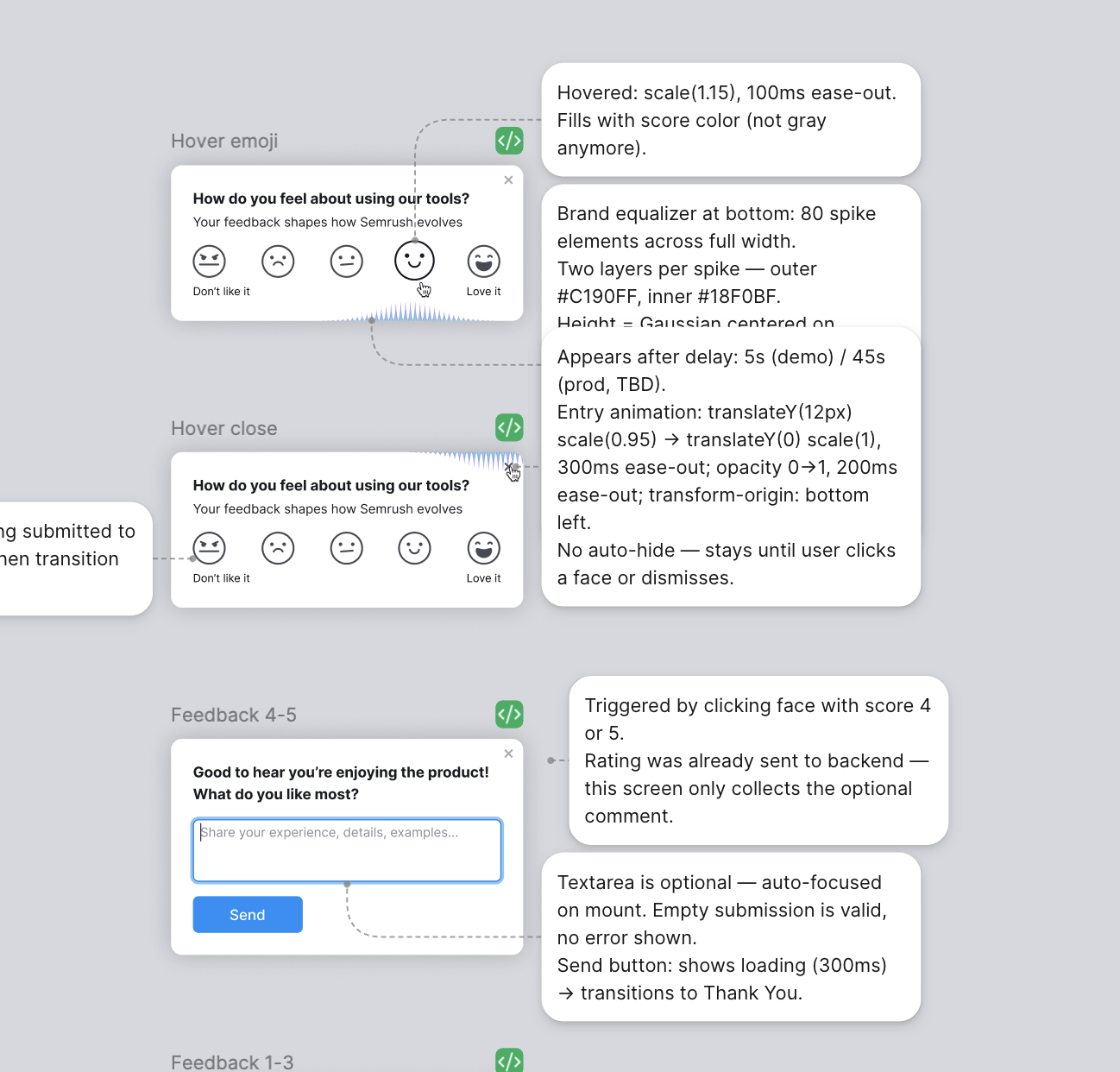
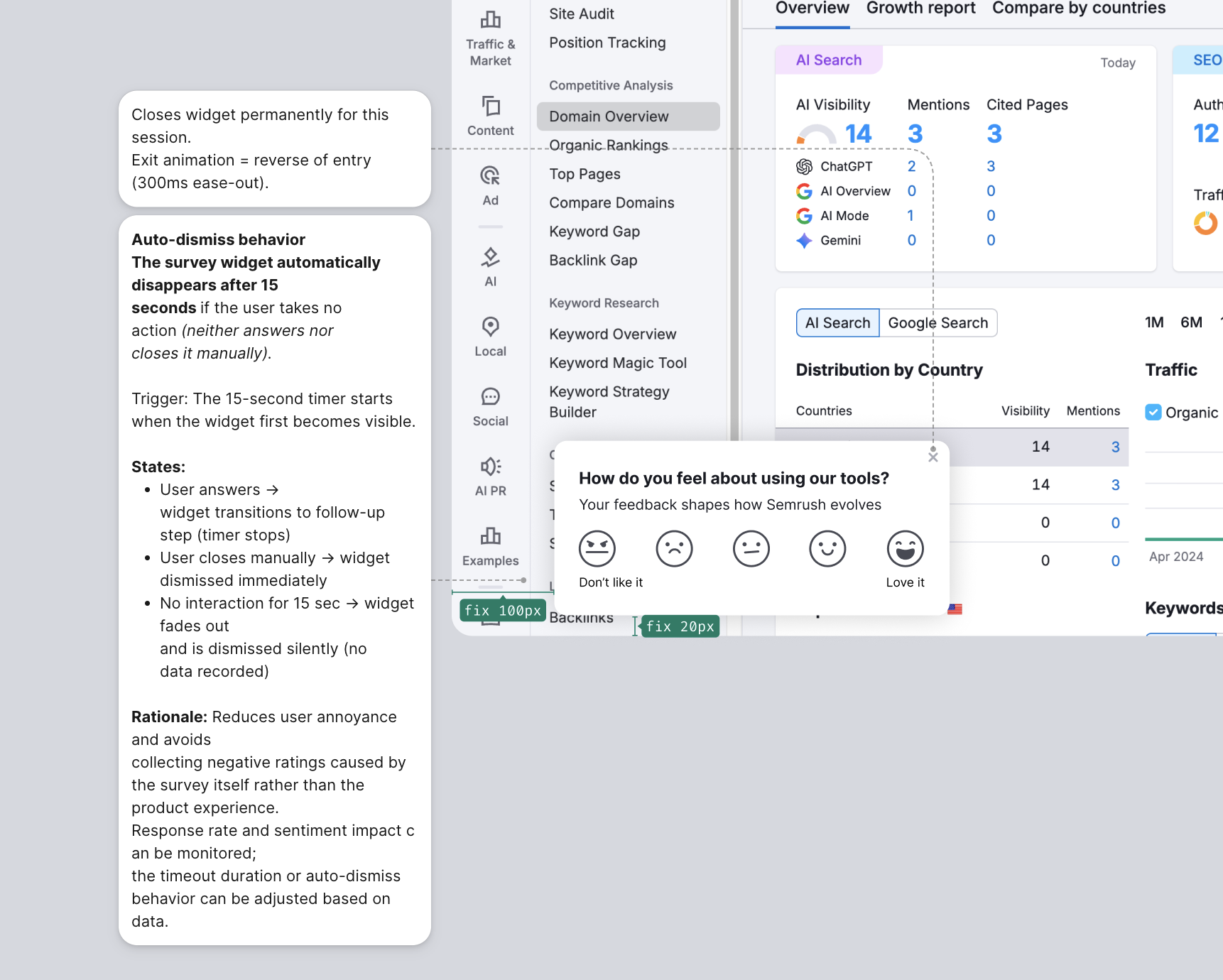
Designed a customer satisfaction survey widget from scratch — the first standardized feedback mechanism at the company. Challenged the initial brief: proposed time-based triggers instead of action-based to reduce sampling bias. Went through 8 iterations with 5 stakeholders over 3 weeks.

CSAT survey widget in its hover state CSAT widget states laid out in Figma CSAT widget placement options in Figma

05Multilogin Page A/B Experiment

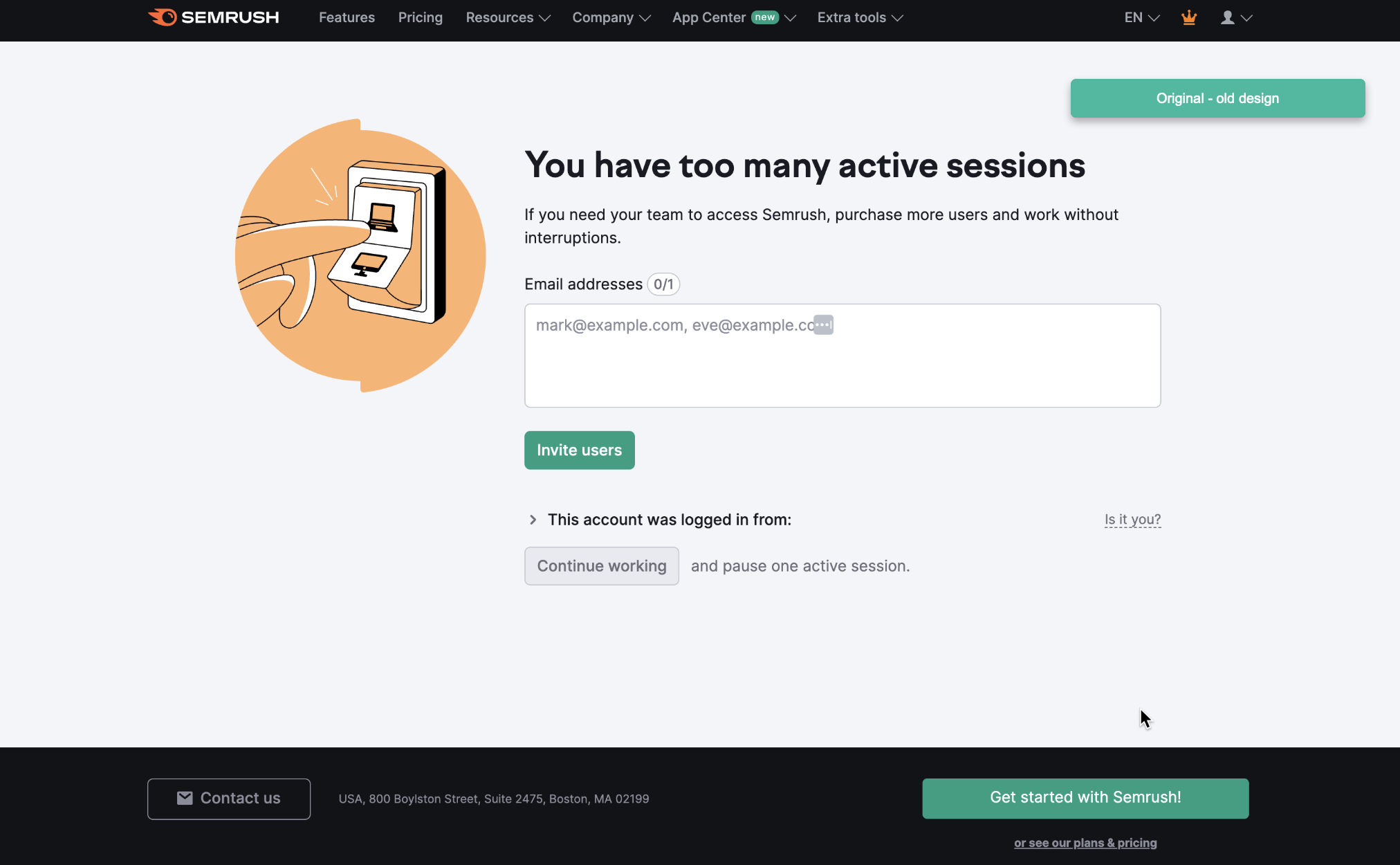
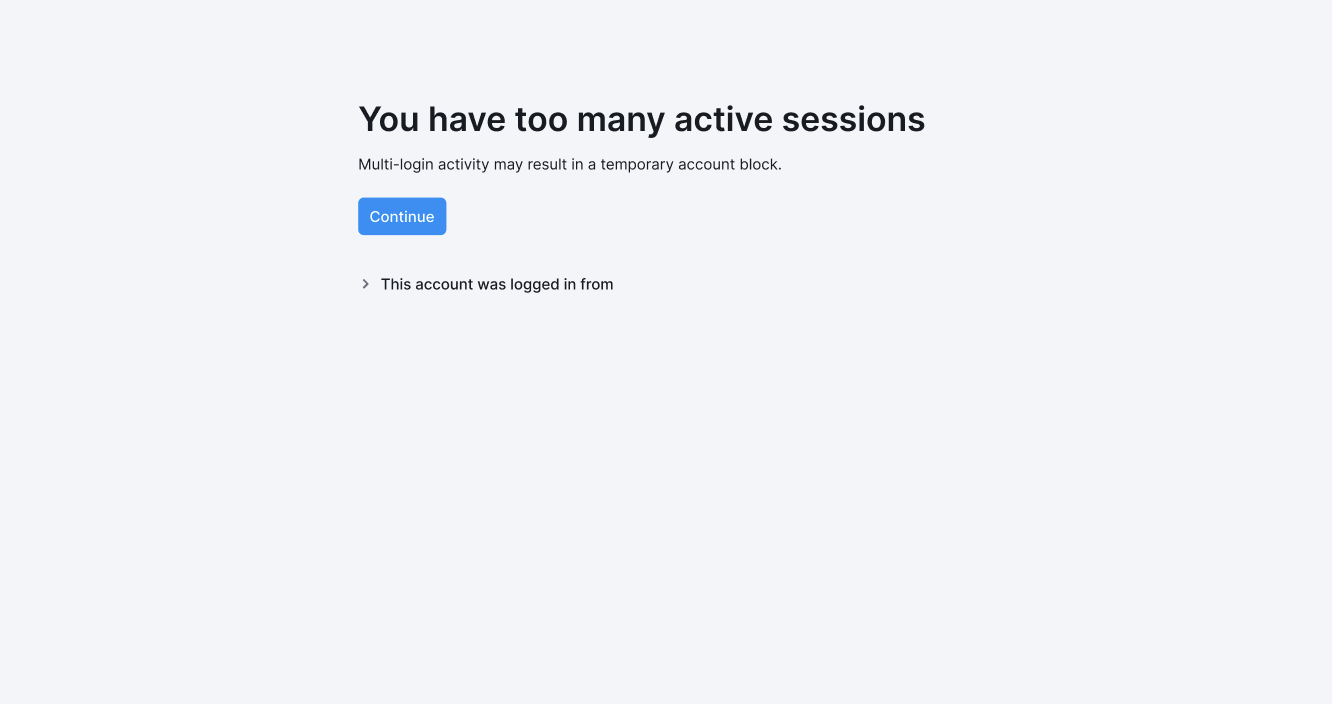
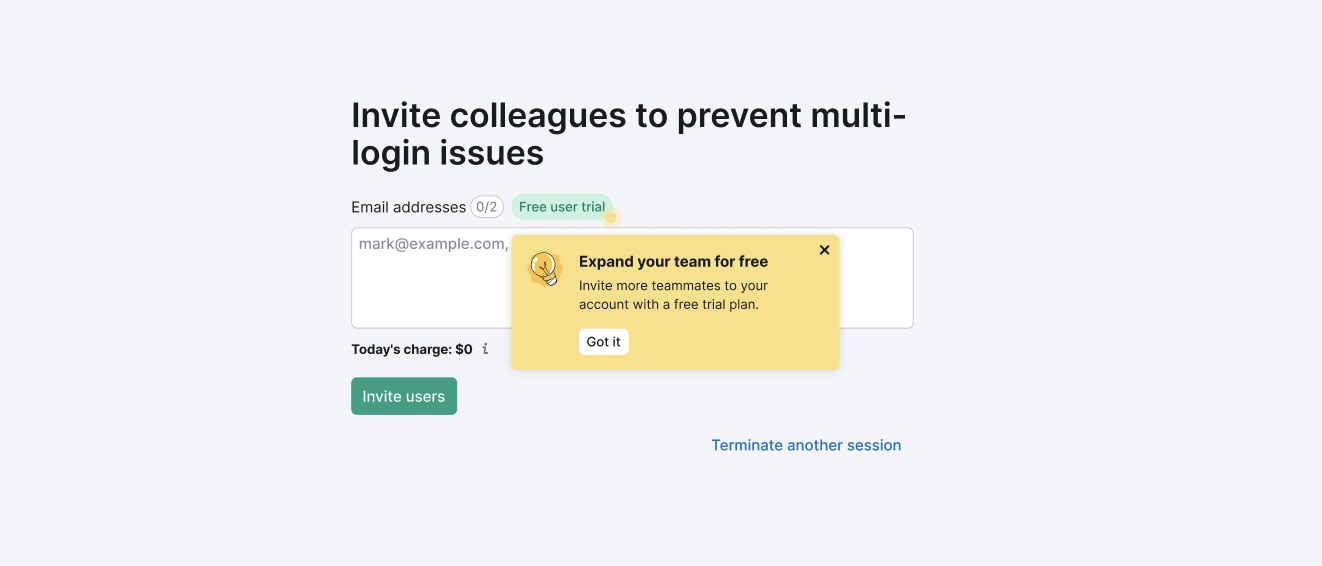
Redesigned the session-limit page from a single-screen upsell into a 2-step flow: first an awareness/friction screen, then the commercial offer. Hypothesis: building user intent before the ask would lift trial conversion without increasing churn. Ran as a 50/50 experiment with defined MDE, sample size, and cooldown period.

Multilogin A/B test: the control variant Multilogin A/B test: step one of the two-step flow Multilogin A/B test: step two of the two-step flow

06Asset Haus — Brand Identity Concept

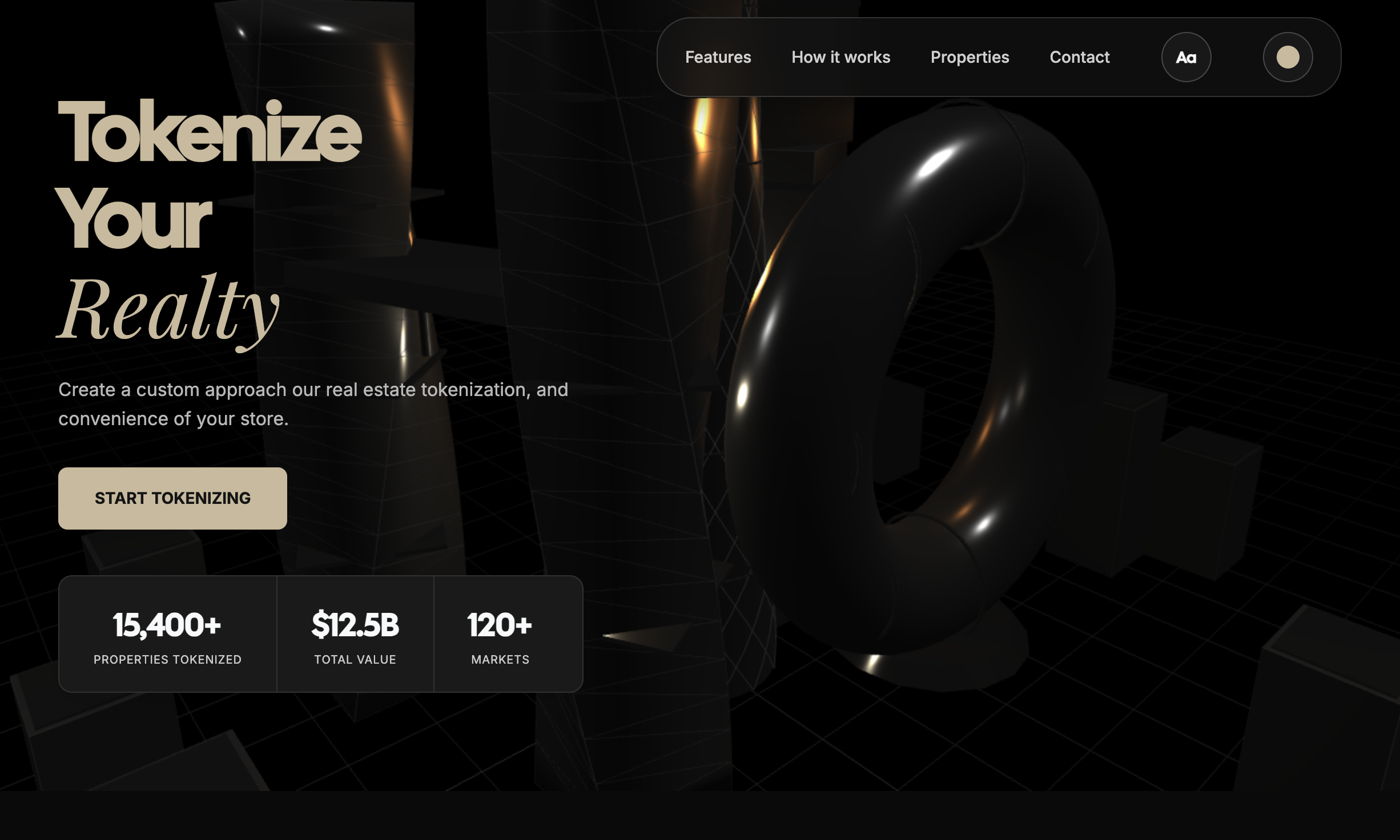
Pitch concept for a real-estate tokenization platform. Instead of a static brand book, I delivered the identity system as a working landing page — palette (lime / beige / black), Inter type stack with a serif accent, isometric pattern language, and a component library (property cards, business card, mobile screens, data viz, ad creative) all shown in real context. The deck IS the website.

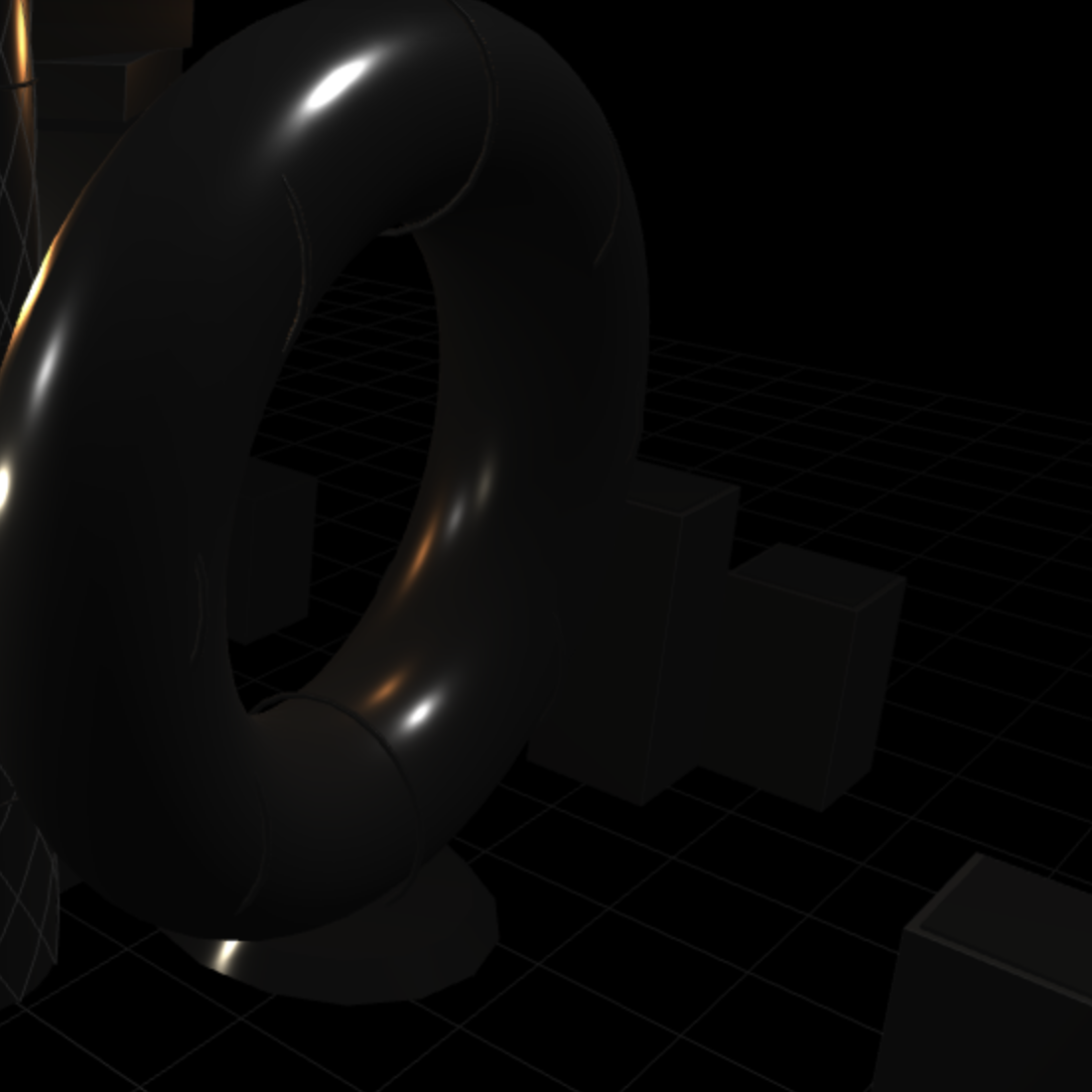
Asset Haus hero — Tokenize Your Realty Asset Haus — 3D 'O' sculpture rendered in Three.js on the live demo

07Google Ara Constructor (Concept)

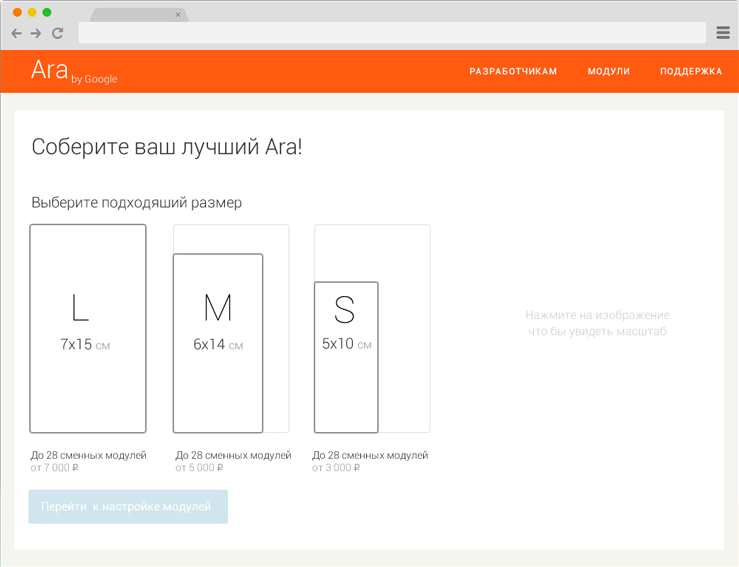
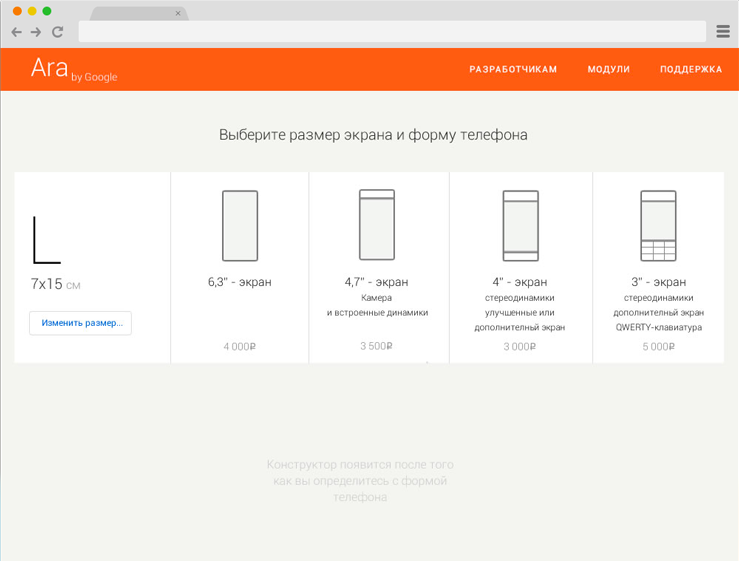
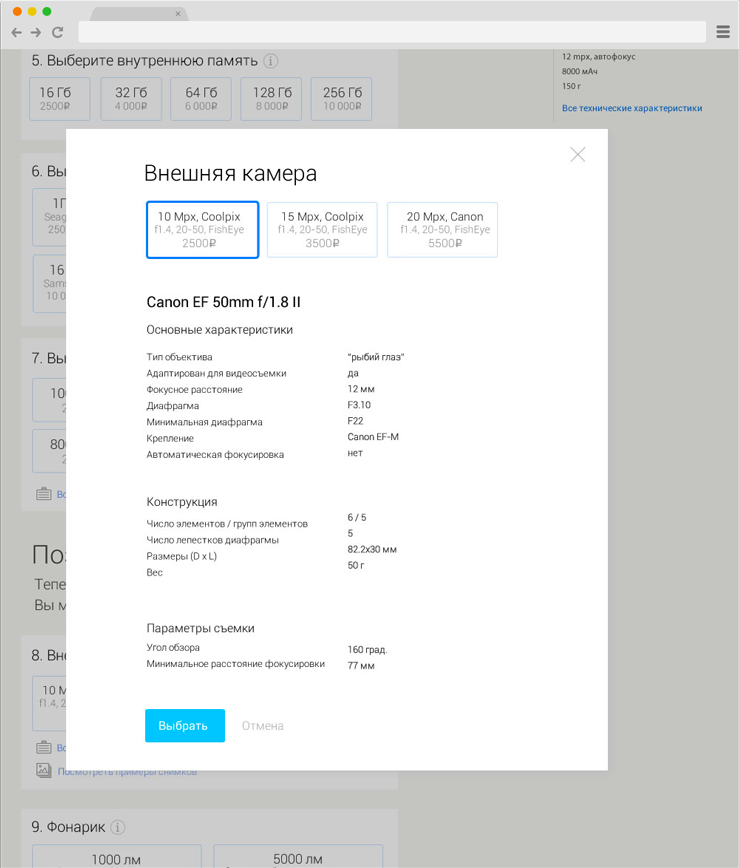
Early self-initiated work, 2014. Google had announced a modular phone and nobody had shown how a person would actually assemble one, so I designed the constructor. Physical form first — size and shape, each option drawn against a hand for scale — then the module slots: processor, RAM, battery, OS, colour, with a counter carrying the "am I done yet" question through the whole build. Prototyped in Axure and recorded as a walkthrough, so the flow could be watched instead of described.

Choosing the phone size, each option shown against a hand Module configuration screen with the slots counter Full specifications view for a single module
How I Work

Every task starts with a structured discovery: I mine support cases, pull analytics, and generate 4 solution variants before opening Figma. Each task gets a context.md — an append-only decision log with full reasoning and stakeholder feedback that survives scope changes.

Figma designs flow through MCP directly into working React prototypes. Stakeholders see something interactive the same day. Handoff means a complete spec: all states, accessibility, analytics events, component imports. I stay available during dev — fewer surprises, faster shipping.

On the side: 9 mobile apps independently shipped to the App Store — concept, UX, development, monetization, live users. I know what it takes to go from idea to profit as the sole decision-maker.

Get in touch →

Prague · CET · Open to senior product design roles